Professional Lawn Care vs DIY: What's Really Worth It?
By Greener Lawn Care - 23 July 2026 - 8 min read
At almost every survey I do around Colchester, someone asks the same question, usually half apologetically: could I just do all this myself? It deserves a straight answer, and because I treat lawns for a living, you might expect me to say no. The truth is more interesting than that, and cheaper for some of you than you might think.
The short answer
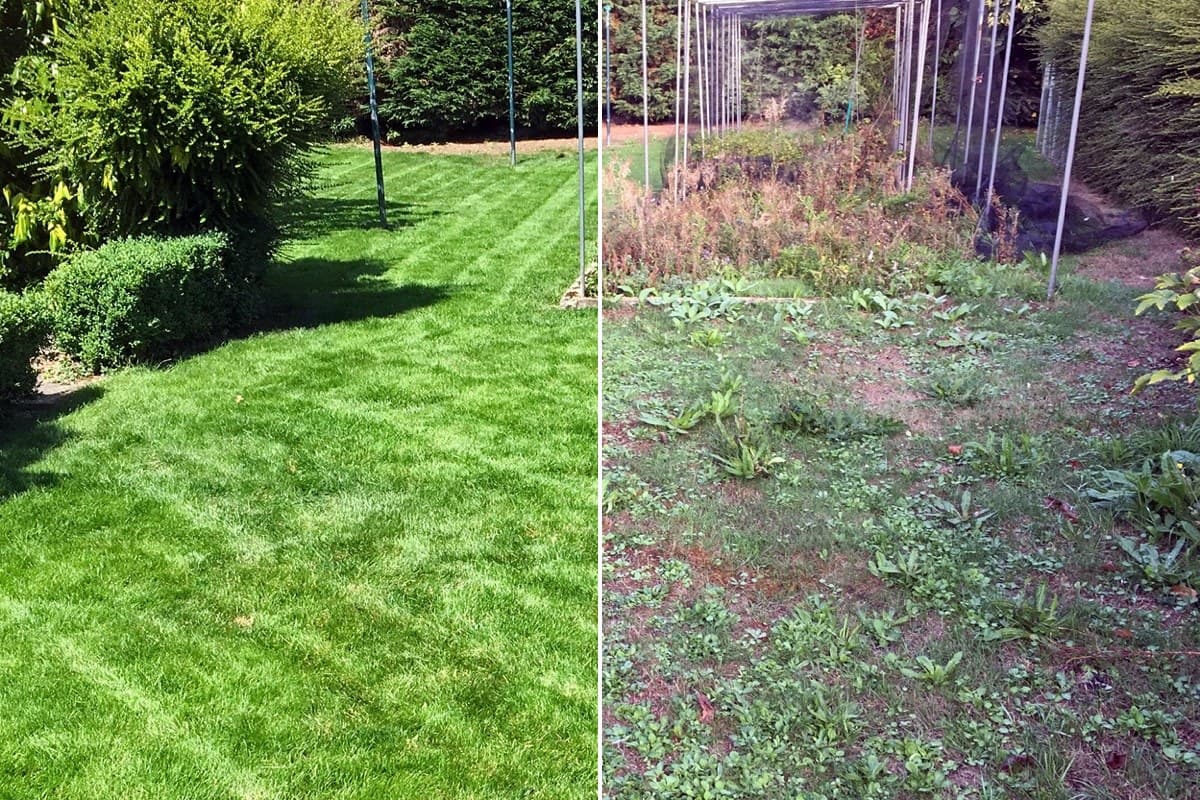
A well-informed DIYer with a small, basically healthy lawn and some free weekends can get about 80% of the way to a professionally maintained lawn. Mowing, watering, and a sensible feeding routine are all achievable at home. Professional lawn care earns its keep in the remaining 20%: diagnosis, product quality, precise timing, and the machinery work of scarification and aeration, which is genuinely uneconomic to buy or hire for a single lawn. On problem lawns and renovation work, that gap stops being 20% and becomes the whole job.
What DIY does genuinely well
Three jobs make up most of what a good lawn needs, and all three are firmly in DIY territory.
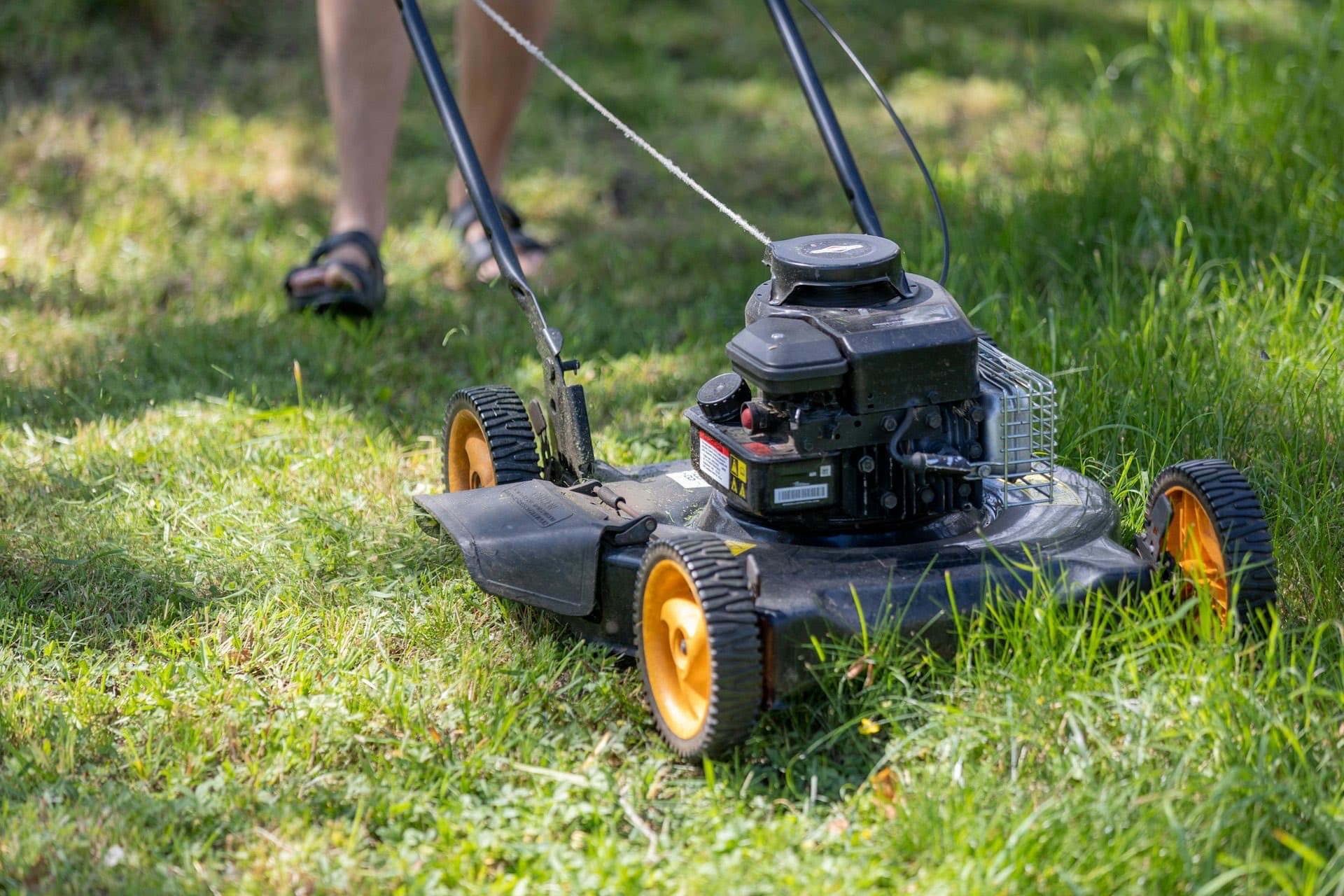
Mowing is the single biggest influence on how a lawn looks, and it is the one job that has to happen weekly through the growing season whoever does it. Little and often, a sharp blade, and a cutting height of 35mm or more in summer will do more for your lawn than any treatment I can apply. Nobody needs a professional for this, they need a routine.
Watering is a knowledge problem, not a skill problem. Once you know the rules, you can do it as well as anyone: deep soaks once or twice a week rather than a daily sprinkle, always in the morning and never in the evening, with a jam jar on the lawn to measure what the sprinkler actually delivers. The full method is in our summer watering guide, and it costs nothing but attention.
A basic feed is also within reach. A granular spring feed, applied evenly with a broadcast spreader at the rate printed on the bag, will green up most lawns convincingly. The spreader is a one-off purchase of around £40 to £80 and will outlast the lawn. Ignore anyone quoting magic dial settings: calibrate on a small test area first, because every spreader and every product throws differently.
Do those three things well and consistently, and your lawn will already look better than most on the street.
Where DIY usually goes wrong
I see the same failures again and again on lawns I get called out to, and almost none of them come from laziness. They come from the gap between buying a product and knowing when and how to use it.
- The right product at the wrong time. A high-nitrogen spring feed applied in a dry July scorches the lawn instead of feeding it. An autumn feed used in April pushes the wrong kind of growth. The bag rarely explains this, because the bag wants to be bought in every season.
- Over-application. Twice the rate is never twice the green. Overlapping spreader passes leave stripes of scorch that take weeks to grow out, and ferrous sulphate applied too generously blackens far more than the moss and stains every path and patio it touches.
- Moss killed, causes ignored. Killing moss is the easy part. If the compaction, shade, drainage, or thin grass that let it in are never addressed, it returns every winter, and the annual moss-killing ritual becomes a subscription of its own.
- Weedkiller misuse. This is the one that genuinely worries me. Non-selective weedkiller meant for paths kills the lawn along with the weed. Blanket-spraying a whole lawn to hit a dozen dandelions puts chemicals where none were needed. And spraying in late autumn or winter does nothing at all, because selective weedkillers only work on weeds that are actively growing, which means spring to early autumn.
None of these mistakes are stupid. They are exactly what happens when the product is available to everyone but the training is not.
What the DIY kit actually costs
If you want to go beyond mowing and a spring feed, the shopping list grows quickly. A realistic setup looks like this: a broadcast spreader, a pressure sprayer, three or four bags of seasonal feed a year at roughly £15 to £25 a bag, a selective weedkiller concentrate, and grass seed for overseeding. Expect £200 to £300 in the first year, less in the years after, since the tools keep.
The machinery is where the economics break down. An electric scarifier at £100 to £200 is a genuinely useful tool for light thatch on a small lawn, and if that describes your garden, it is money well spent. But a proper renovation-grade scarification needs a petrol machine with adjustable depth and real weight behind it, and so does hollow-tine aeration on our Essex clay. Hiring one runs to £50 to £80 a day per machine, plus collecting something the weight of a washing machine, plus doing the job right first time with no practice runs. For one lawn, once a year, the sums rarely work, which is exactly why this is the part people hand over first.
Not sure whether your lawn needs the machinery work or just a decent feed? A free lawn survey gives you an honest answer either way. Book a free lawn survey
What you are actually paying a professional for
When you pay for professional lawn care, the visible part is someone applying products. The value is mostly in things you cannot see on the day.
Diagnosis. Telling red thread from drought stress, or a grub problem from a fungal one, changes the entire treatment. Just as often, the skill is knowing what not to apply. I regularly walk away from lawns having recommended less than the owner expected.
Products. Professional-grade feeds release nutrients over weeks rather than dumping them at once, and they are matched to the season rather than to whatever the garden centre has on offer. Professional weed control products require training and certificates to use legally, which is precisely why they work better than the retail versions.
Timing. The difference between a good result and a wasted application is often ten days of weather. A professional plans treatments around growth and conditions, not around the free Saturday.
Machinery, used at the right moment. Scarification done in the prime autumn window of September to mid-October, with early spring as the fallback, recovers beautifully. The same job done at the wrong time leaves bare soil for weeds. Our scarification timing guide covers why, and it is honest about the fact that the machine matters as much as the date.
The honest verdict
If you have a smallish lawn in reasonable health, enjoy the work, and are willing to read up on timing, DIY will serve you well. Get the mowing and watering right, feed sensibly, spot-treat the odd weed, and you will be in that 80% comfortably. I would rather you did that than paid anyone for work your lawn does not need.
Professional care earns its money in three situations. Problem lawns, where persistent moss, compacted clay, or years of thatch need diagnosis and machinery rather than another bag of feed. Renovation work, where scarification, aeration, and overseeding have to land in the right window and be done properly first time. And busy households, where the honest constraint is not knowledge but weekends. Plenty of my customers are capable DIYers who simply decided their Saturdays were worth more than a hire van and a hollow-tiner.
There is also a hybrid that works well: you keep the mowing and watering, a professional handles the treatments and the annual renovation. That split plays to what each side does best.
How we handle this at Greener
Our approach is built around that split. The Treatment Plan covers the year's treatments, and a lawn renovation is booked alongside it as a one-off, because that machinery work is exactly the part DIY cannot do economically. Customers keep the mowing and watering, and we publish guides like this one so they do both well. The treatments themselves follow our eco-friendlier approach: organic-based feeds, minimal weed killer applied as spot treatments rather than blanket sprays, and an electric van doing the rounds.
Everything starts with a free survey, where I will tell you plainly which parts of your lawn's care you could handle yourself. How it works explains the process from survey to first treatment. If the answer is that a spreader and a watering routine will sort you out, that is the answer you will get.
Mow well, water in the mornings, feed at the right time, and you are most of the way there. The rest is where I come in.
Want help with your lawn?
Book a free lawn survey and we'll take a look at your lawn. No obligation, honest advice.