
Services
Full Lawn Restoration
For lawns that genuinely are past saving
Some lawns really are past saving. If yours is more weed than grass, or the grass itself is coarse and wiry, no amount of feeding will turn it into the lawn you want. We clear it off and grow you a new one from seed, levelling out the dips while the ground is open. A replacement lawn, for about half what turf would cost.
Priced for your lawn after a free survey. Levelling included.
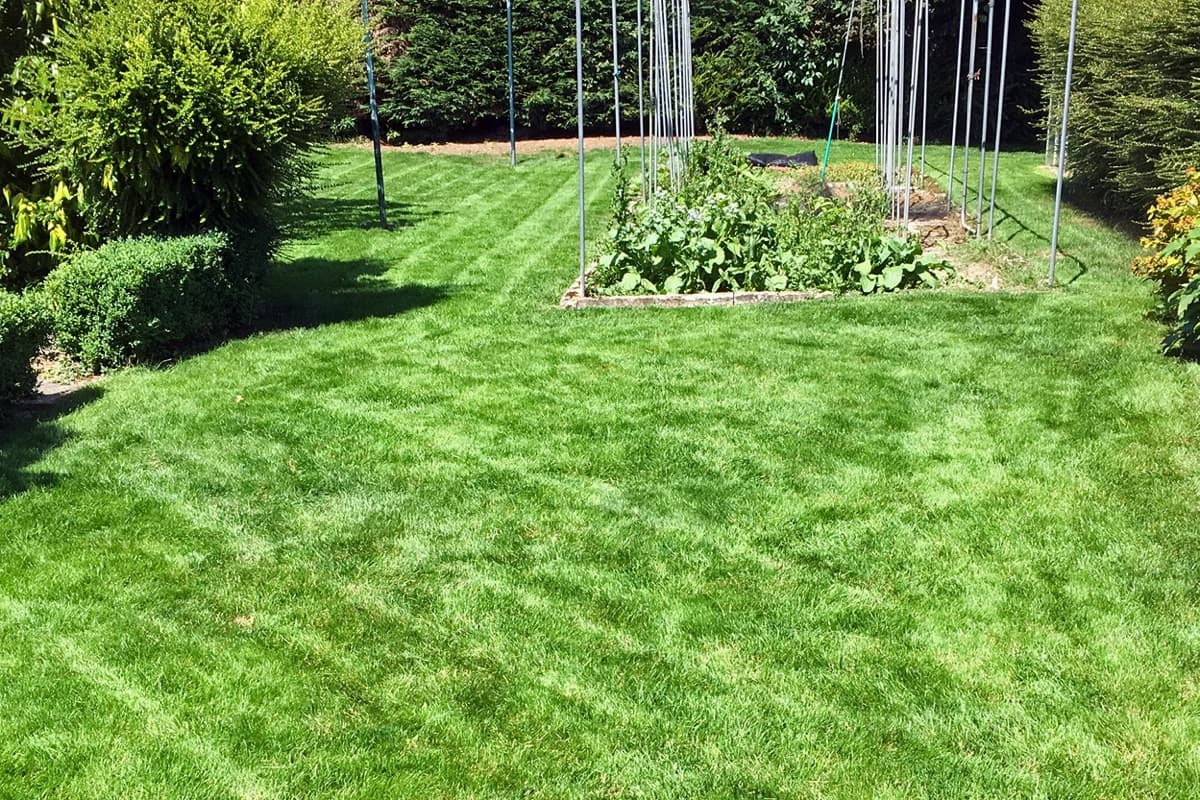
First, the honest bit
Plenty of lawns look past saving but are not. If yours is thin, mossy, patchy or brown after a dry summer, the grass is very often still there and worth building on, and a renovation will turn it around for a fraction of this.
We will tell you that at the survey if that is what we find, and we would rather do the smaller job well than sell you the bigger one. A renovation keeps the lawn you already have and thickens it up, and it suits nearly every lawn we look at.
A restoration is for something different. It is for lawns where the grass itself is the problem. Coarse, wiry species that stay coarse no matter how well they are fed. Weeds so established that selective treatment will not shift them. Sowing good grass seed into either of those is money wasted, because the plants already there outcompete every new seedling. That is the point at which starting again is the cheaper answer, not the more expensive one.
How it works
Four visits over roughly six to eight weeks.
- We kill the old lawn off. One application across the whole lawn. It only works while the grass is actively growing, which is what dictates the season for the whole job.
- We go back over the survivors. About two weeks later. Coarse grasses and established weeds usually need treating twice.
- The main day. Once everything has died back we scarify it right down to bare soil, work the surface, and fill and rake out the dips. Then organic topdressing goes down to build a proper seedbed, and we sow the new lawn.
- We come back to check it. Three to four weeks after sowing, to see how the seed has germinated, put more down on anything thin, and give it its first feed.
You end up with a new lawn grown in your own soil, with roots going down into ground we have opened up, rather than turf sitting on a thin layer of someone else's.
What bare ground turns into
This one was a renovation rather than a restoration, but it shows the part people find hardest to picture: what bare ground looks like on the way to becoming a lawn.
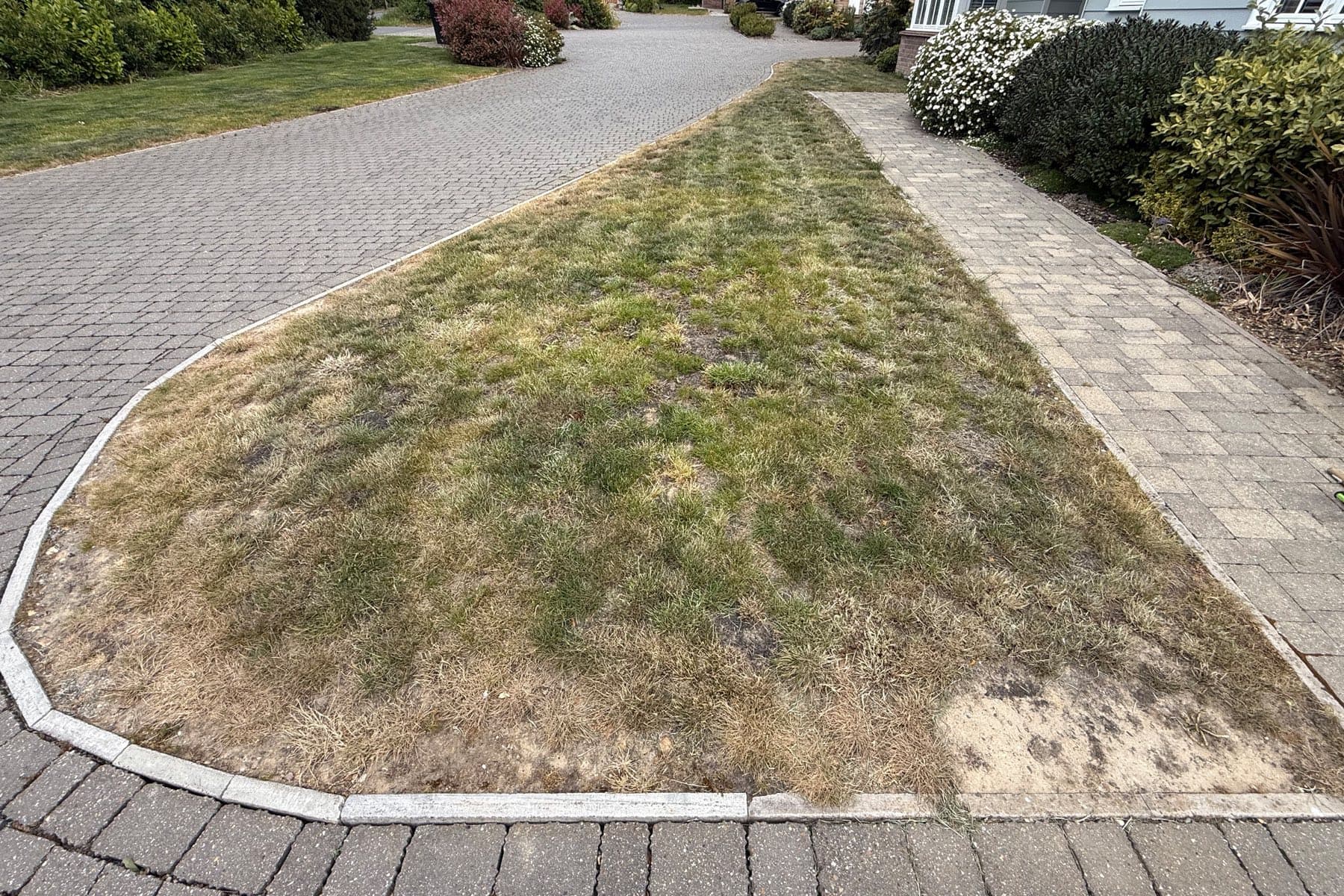
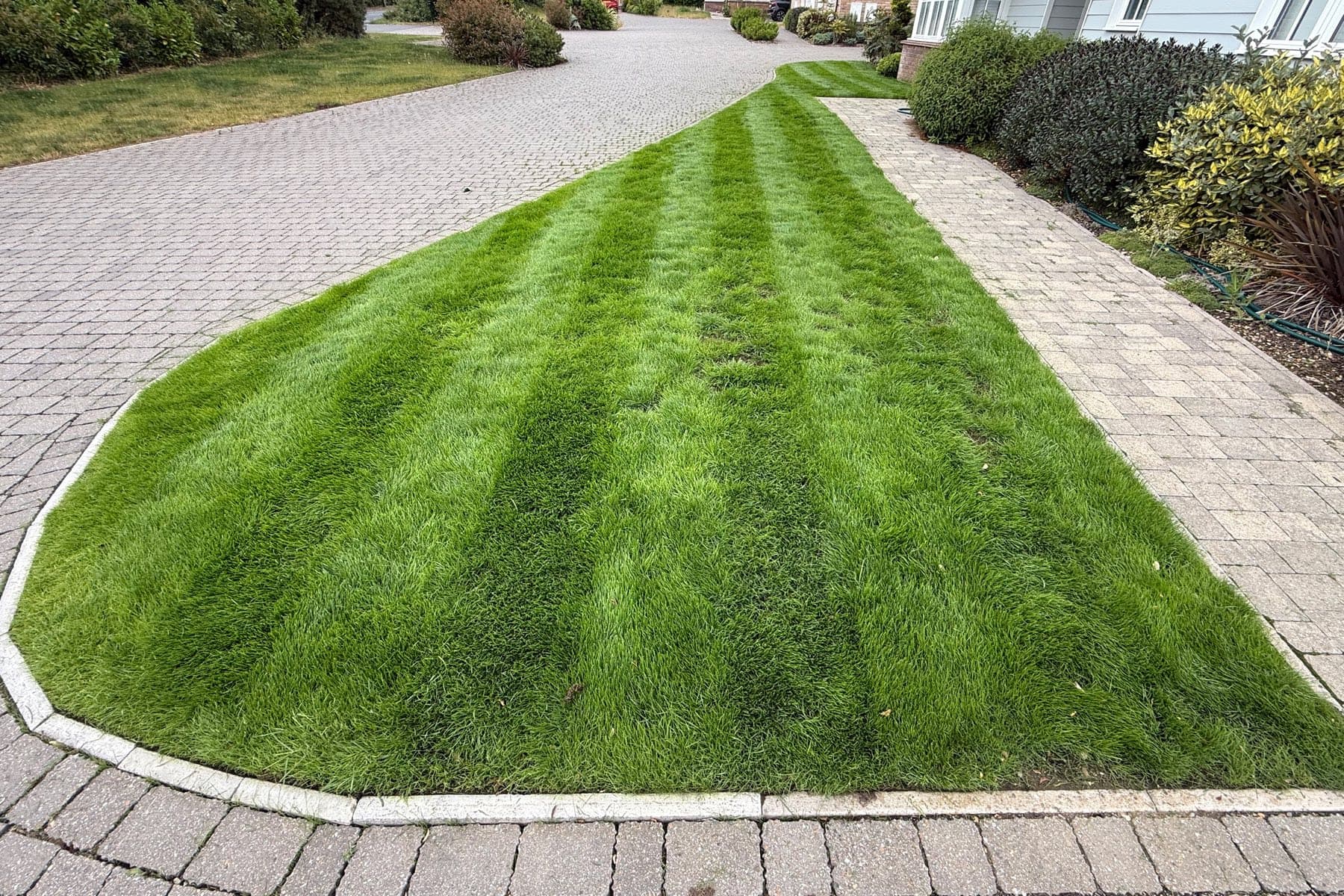
Bare new-build clay to thick striped lawn
Wickham Bishops, CM8
A four-year-old new-build lawn on heavy clay that had thinned right out. Wide patches of bare, dry soil showed through where the grass had given up, and the whole front lawn looked tired, hungry and uneven.
A thick, even lawn with deep colour and crisp mowing stripes, right out to the edges where there used to be bare soil.
Dips and hollows get levelled
This is the one job where levelling actually works, and it is included. While the surface is bare we fill the dips and hollows and rake it out level before seeding.
On a lawn we are keeping, that is not possible. Filling a hollow means burying the grass growing in it, and only a thin layer of topdressing can go over an established lawn at a time, so dips can only be improved gradually over several seasons. If uneven ground is one of the things bothering you, a restoration is the point at which it gets properly fixed.
Bigger level changes, reshaping the ground or cutting in a terrace, are groundworks rather than lawn care. We will say so and point you in the right direction.
Spring or early autumn only
Seed needs warm soil to get going from bare ground, so a restoration runs in April to May, or late August to September. Early autumn is the better of the two: the soil is still warm and there is more reliable moisture.
We will not start one outside those windows, and we will not start one during a hosepipe ban. Bare soil has no grass over it to hold moisture, so it dries out within hours, and seed that dries out does not come back.
Out of season? Book a survey now. We will get you into the next window and tell you what is worth doing in the meantime.
What it costs
Priced for your lawn after a free survey, with levelling included. The price depends on the size of the lawn, its condition and access, and you get it before we start.
Returfing runs from £10 to £25 per square metre once you count stripping the old lawn, waste removal, topsoil, turf and labour. See the full comparison →
The weedkiller question
A restoration means one application of a total weedkiller across the lawn, and we would rather be straightforward about that than dress it up. It is the one job we do that needs it. Our renovations and our plan visits use selective treatment, which takes out weeds and leaves the grass.
Used here, it is a single treatment instead of years of treating coarse grasses selectively and losing, which puts far more weedkiller down over time and still does not fix the problem. We will tell you exactly which product we are using and how long to keep off the lawn afterwards.
If you would rather no total weedkiller was used at all, we can lift the old lawn off mechanically instead. It costs more and produces a lot more waste to dispose of, but it is a genuine option and we are happy to quote it.
What to expect while it establishes
The first few weeks test your nerve, so it is worth knowing what is coming. For two to three weeks it looks bare, because it is. Seed starts coming through within one to three weeks depending on temperature, and the lawn knits together over the two months that follow.
Keep off it as much as you can early on. Water it well: in warm weather that means a good soak in the morning rather than a light sprinkle, and it matters more than anything else you do. First cut once it reaches around 5 to 6cm, on a high setting with sharp blades.
Most customers move onto The Treatment Plan afterwards. A new lawn with no aftercare goes the same way the old one did.
Who it is for, and who it is not
A restoration is right if
- The lawn is dominated by coarse or wiry grasses rather than fine lawn grasses
- Weeds are too established for selective treatment to clear
- Previous renovations have not held, because the grass population itself is the problem
- The ground is uneven and you want it levelled properly
- You have been quoted for returfing and want the same result for around half the cost
It is not the right job if
- There is still decent grass worth keeping. A renovation costs a fraction of this, and we will tell you if that is what we find
- You need a finished lawn within six weeks
- You cannot water it through establishment
- You want the work done between October and March
- The ground needs regrading or a genuine change of level. That is groundworks
Been quoted for returfing? A restoration gives you a replacement lawn for around half the price, with levelling included, and it deals with the soil rather than covering it over. See how the two compare →
Restoration questions
How is this different from returfing?
How much does it cost?
How do I know if my lawn needs this rather than a renovation?
Will it sort out the bumps and dips?
Why only certain times of year?
What weedkiller do you use, and is it safe?
Can I have this done without a total weedkiller?
How long before it looks like a lawn?
Find out whether your lawn needs replacing
Book a free survey. We will look at what is actually growing there and tell you honestly. If a renovation would turn it around for a fraction of this, we will say so. If it genuinely needs replacing, you will get a clear price.
Not sure yet? Compare renovation, restoration and returfing →
Free survey · No obligation · No hard sell