
Services
Scarification & overseeding
One of the most impactful treatments for long-term lawn health. We remove thatch and moss mechanically, aerate to relieve compaction, then overseed and topdress to fill the gaps with fresh, healthy grass. It's not gentle, but nothing else comes close.
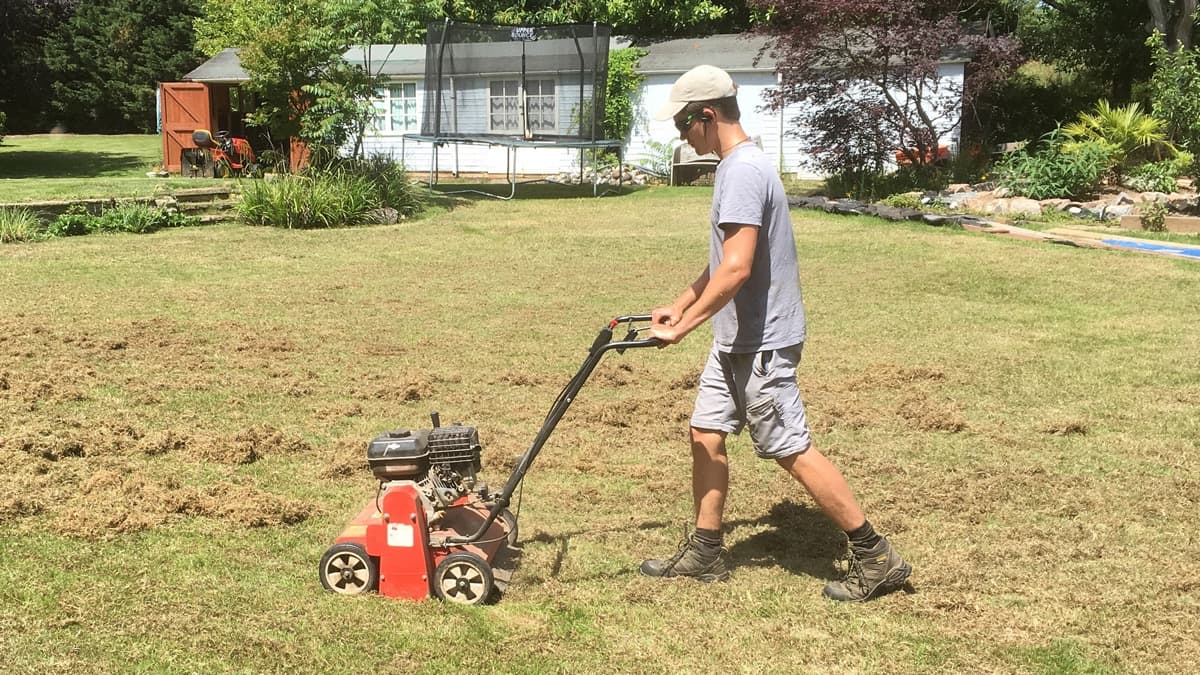
What is lawn scarification?
Scarification is the process of mechanically removing thatch - the layer of dead grass, moss, and organic debris that builds up between the grass blades and the soil surface. A professional scarifier uses vertical blades to cut through this layer, bringing it to the surface for removal.
Thatch isn't always visible. You might have a lawn that looks green but feels spongy underfoot - that's thatch. Left unchecked, it stops water, air, and nutrients reaching the roots. The grass weakens, moss moves in, and bare patches develop.
Scarification opens up the lawn. Water reaches the roots again. Air gets to the soil. Feeds work properly instead of sitting on a mat of dead material. It's not gentle - your lawn will look rough for 2-4 weeks after - but it's the foundation of a healthy lawn. You'll typically see visible improvement within 6-8 weeks of scarification, with the lawn filling in fully by the following spring.
Left unchecked, thatch thickens every year. Feeds sit on the surface instead of reaching the soil. Moss fills the gaps grass can't. Each season without renovation, the problem compounds.
Our renovation standard
Scarification is the first step of a lawn renovation. Every step matters:
- Scarify - minimum two passes in perpendicular directions, blade depth set to your lawn. All waste cleared from your lawn
- Aerate - solid or hollow tine depending on compaction. Relieves compacted soil so water, air and nutrients reach the roots
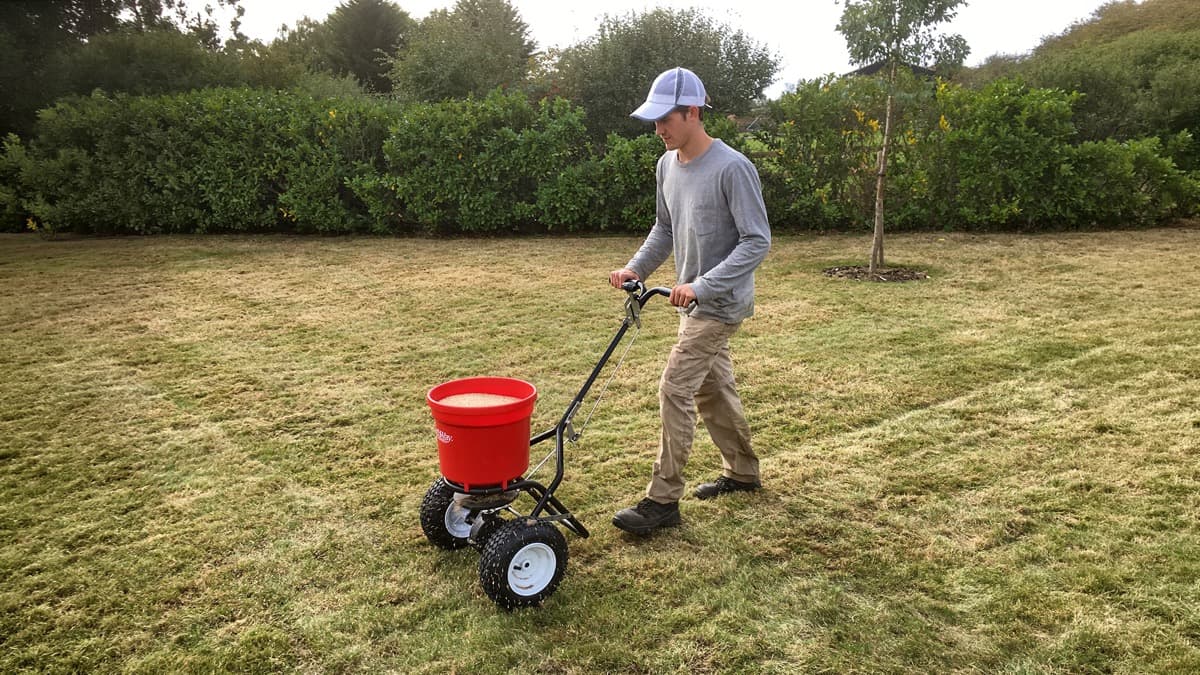
- Overseed - bare patches seeded with a grass mix suited to your conditions (shade tolerance, wear tolerance). Seed pressed into the soil for proper germination
- Light topdress (2-3mm) - a fine organic lawn dressing brushed in to support seed contact and soil structure
This is what professional lawn renovation looks like. Most companies do one step in isolation. We do all four because that's what actually works.
Related: Lawn Aeration → · Moss Control →
When to renovate
In the UK, the ideal window is September to mid-October. The RHS recommends scarifying in early autumn when soil is still warm enough for grass seed to germinate, but the summer heat and drought stress have passed. A one-off renovation can also be done in spring for lawns that need a reset.
Signs your lawn needs renovation:
- The lawn feels spongy or bouncy underfoot
- You can see a layer of brown material at the base of the grass blades
- Moss keeps coming back despite treatment
- Water pools on the surface instead of draining through
- The lawn looks thin despite regular feeding
Want to know how much thatch your lawn has?
Book a free survey and we'll show you.
See pricing for your lawn size · Check if we cover your area
Real transformations
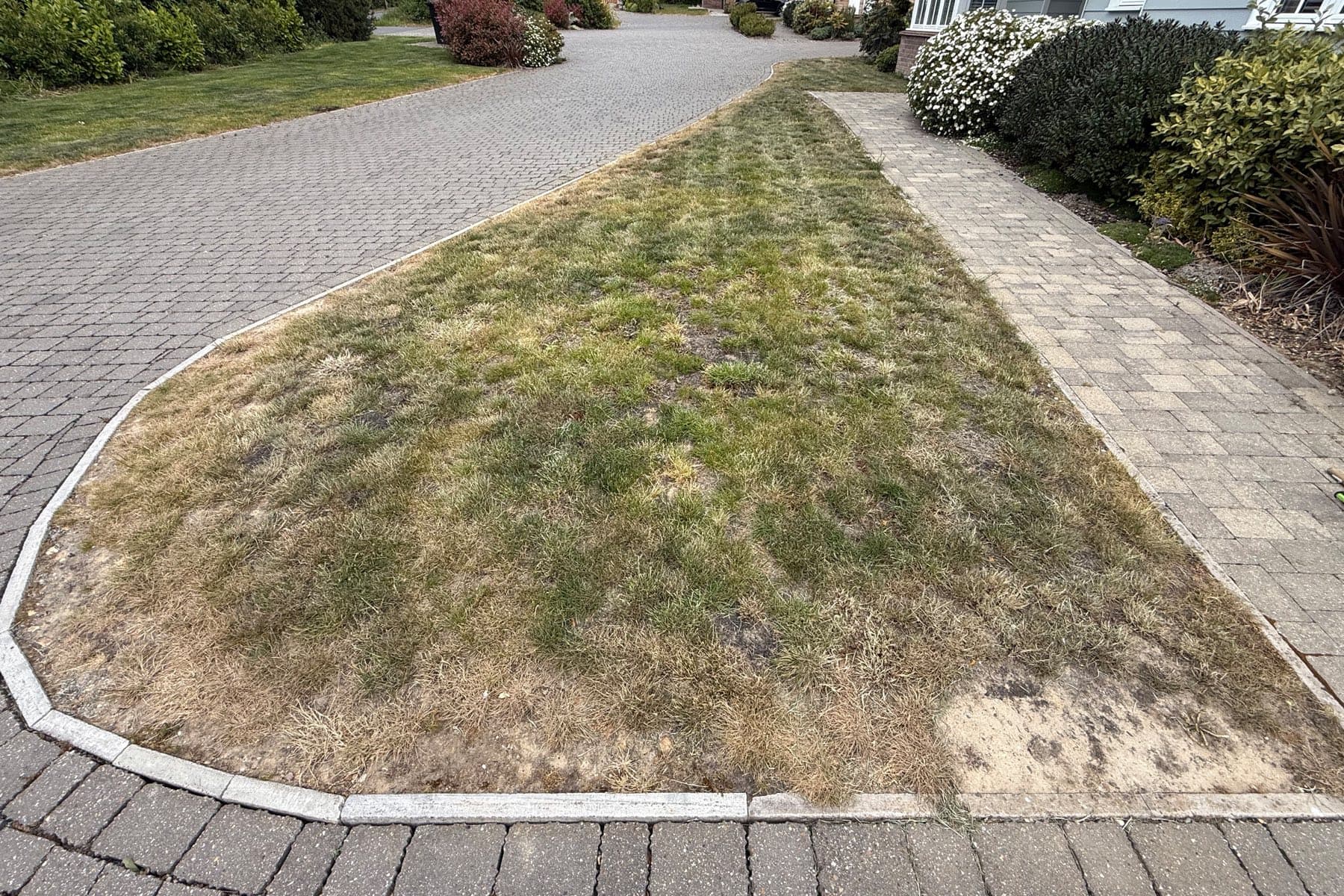
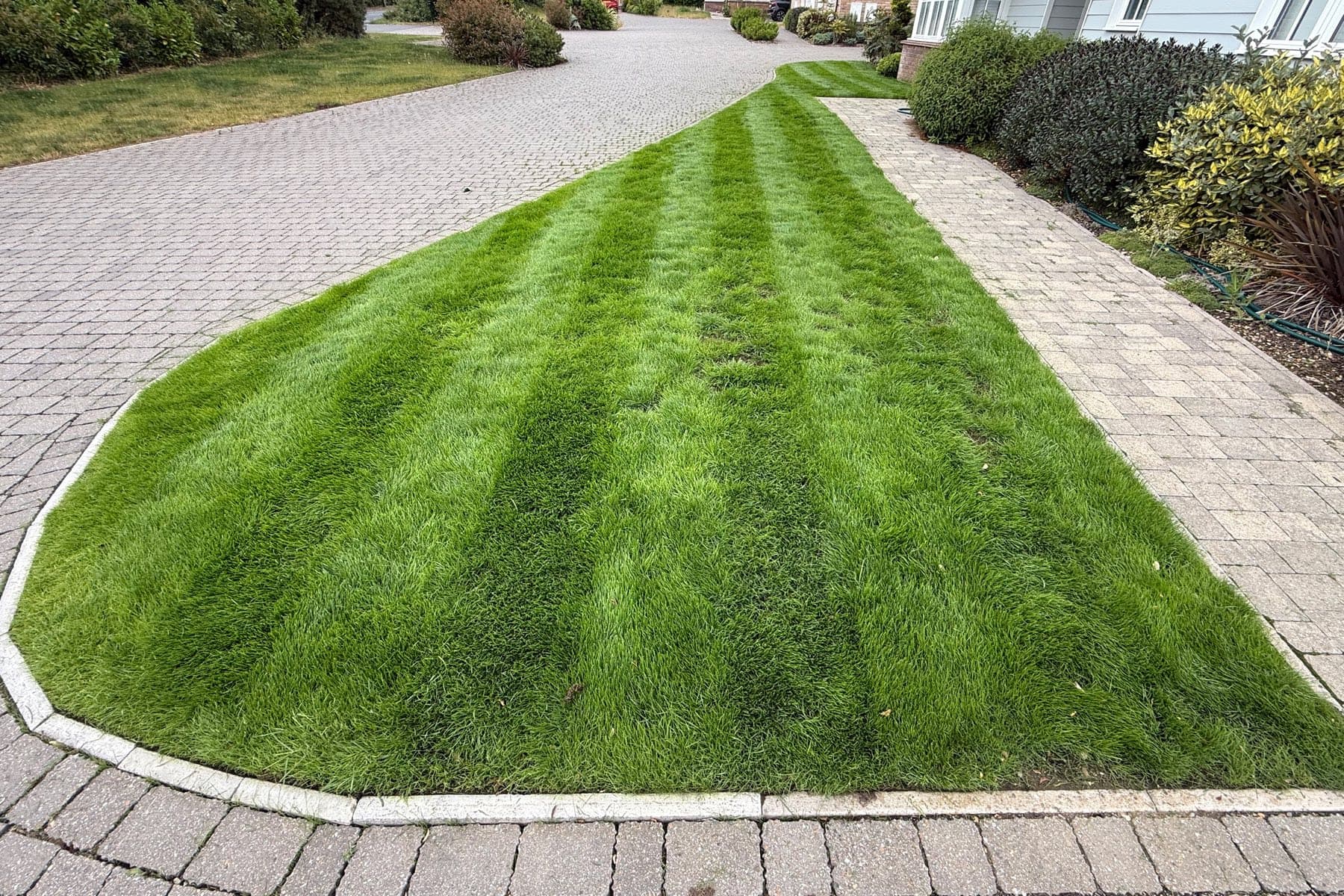
Bare new-build clay to thick striped lawn
Wickham Bishops, CM8
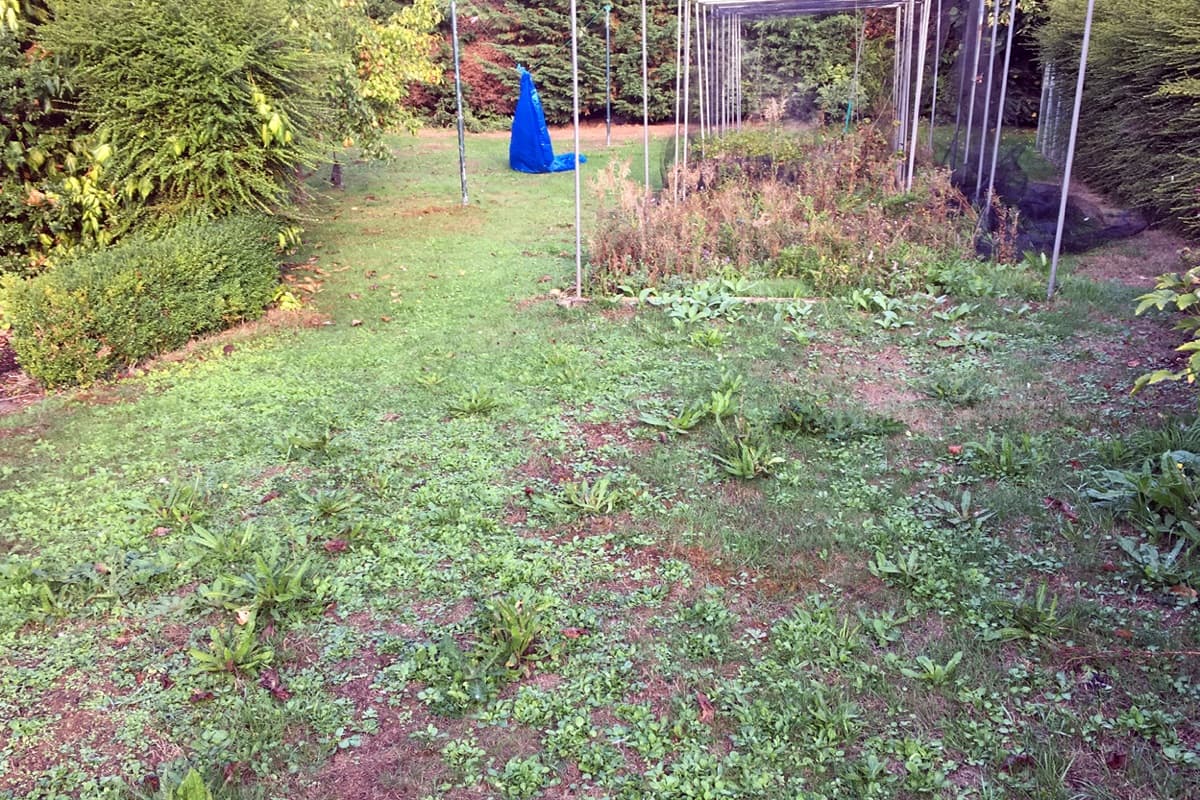
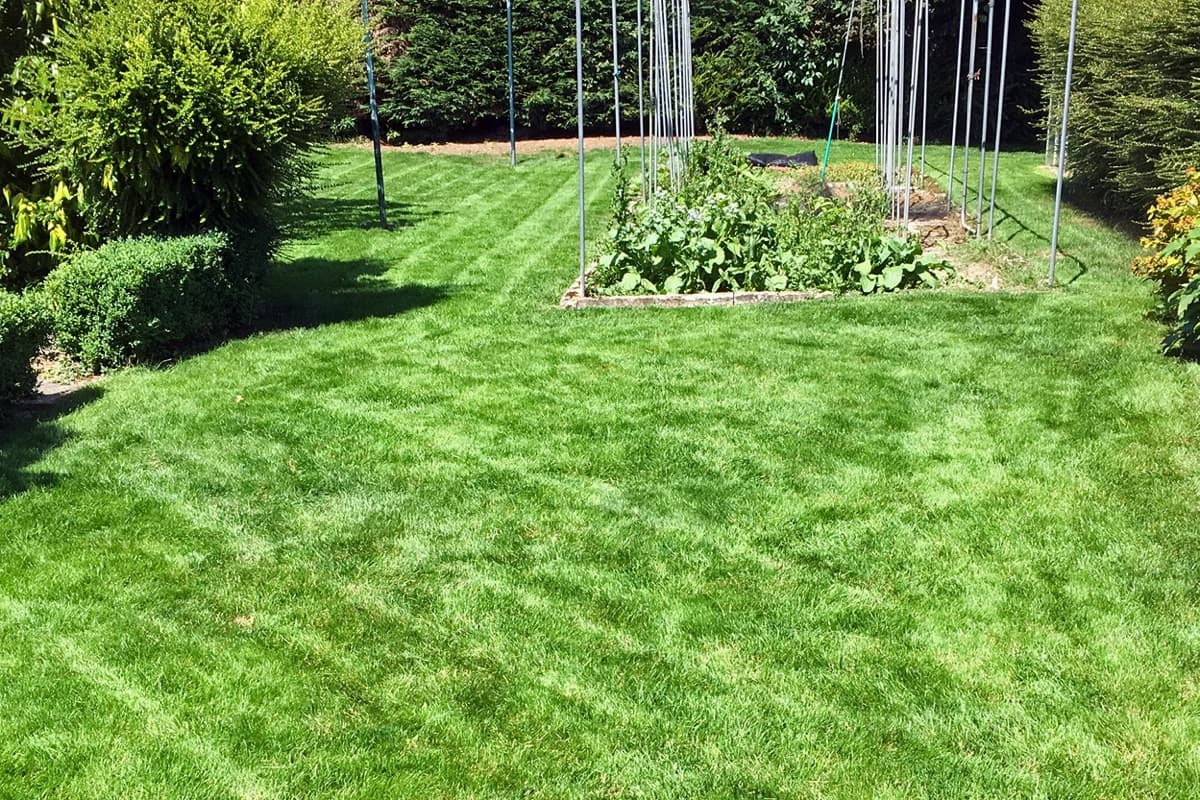
Weed-infested to clean, thick lawn
Danbury, CM3
Renovation and ongoing treatments, together
A renovation gives the lawn its reset. The Treatment Plan keeps it there: four seasonal visits of feeding, weed and moss control, with a report after every visit. Every lawn benefits from a scarify, aerate and overseed each year for the very best result, and spring and autumn dates fill early, so a deposit holds yours.
Not on a plan? We can quote for a standalone treatment too. Book a free survey and we'll assess what your lawn needs.
Scarification questions
When do you scarify lawns in Essex?
How long does the lawn take to recover?
Can you scarify a lawn that’s never been scarified?
Is your lawn ready for renovation?
Book a free survey and we'll assess your thatch levels, compaction, and overall lawn health. You'll get a personalised lawn assessment, yours to keep, whether you sign up or not.
Not ready to book? Read how a free survey works · Check if we cover your area · See pricing
The best window for scarification is autumn. Book early to secure your slot.