Organic-Based Lawn Feed: What It Actually Means
By Greener Lawn Care - 27 July 2026 - 8 min read
Stand in the fertiliser aisle of any garden centre and you will see the word organic on half the bags, printed in reassuring green. The trouble is that on a lawn feed bag, organic can mean three quite different things, and the difference matters more than the price tag. I spread feed on lawns across Colchester every working week, and organic-based feeds are the backbone of everything I do, so let me translate the labels properly.
The short answer
On a UK fertiliser bag, organic describes where the nutrients come from, not a certification like organic food. A true organic feed is made entirely from plant or animal material. A mineral feed is manufactured nutrient salts. An organic-based feed, which is what most quality lawn programmes use, blends the two: mostly organic matter that feeds the soil biology and releases nutrients slowly, with a measured mineral component for a quicker response. Organic-based feeds give steadier colour, less surge growth and a much lower scorch risk, in exchange for a slower initial green-up and a slightly higher price.
What the words on the bag actually mean
The labelling is genuinely confusing, so here is the plain version of the three categories you will meet.
Mineral feeds
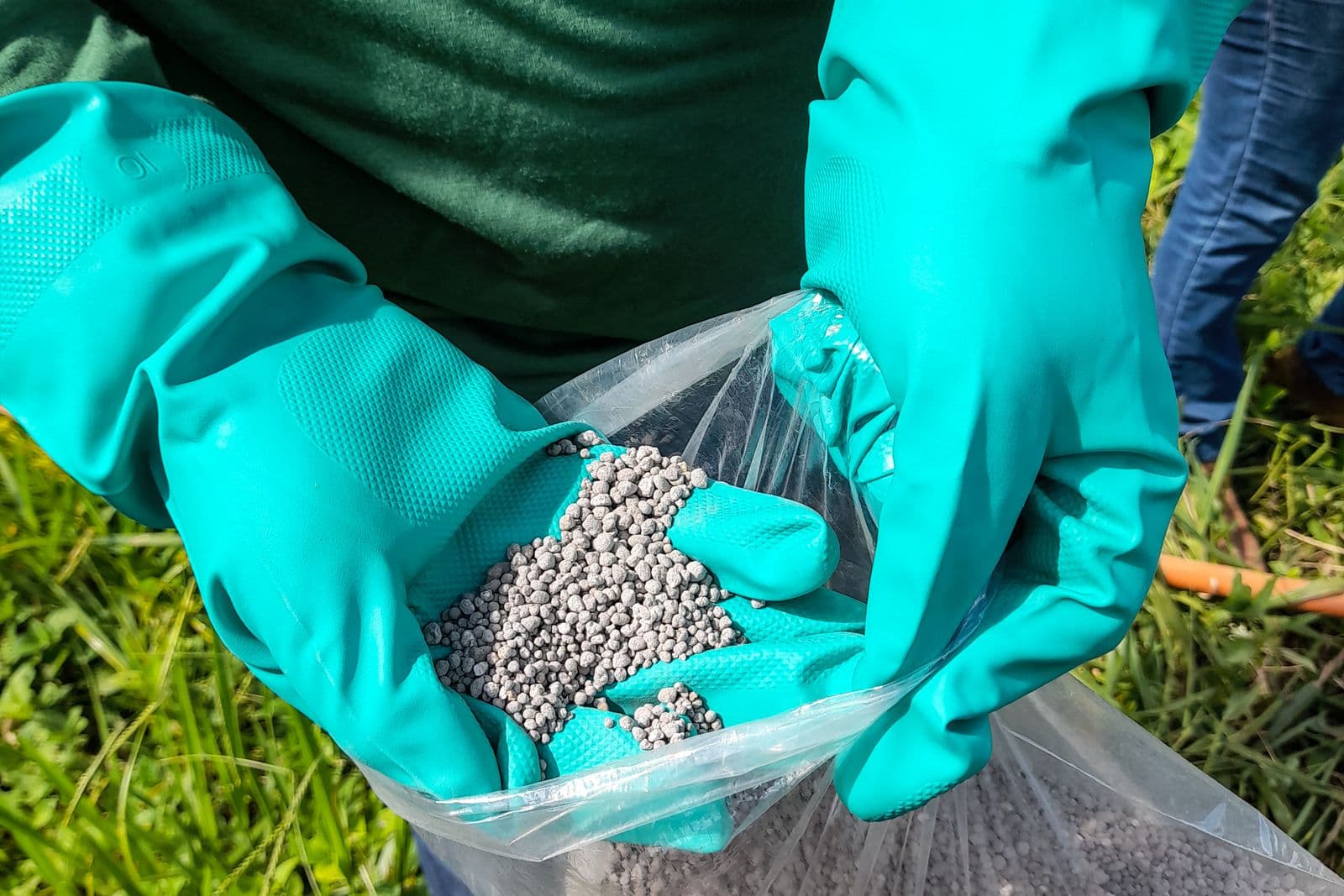
Also sold as synthetic or chemical fertiliser. The nutrients are manufactured salts: water-soluble, precise, and fast. Dissolve them in soil moisture and the grass roots take them up almost immediately. This is why a cheap mineral feed can turn a lawn visibly greener within a week. It is also why it can stripe, surge, and scorch. If the granules sit on the lawn in dry weather, or you overlap your spreading, the concentrated salts pull moisture out of the grass and burn it. Most of the badly striped, patchily scorched lawns I get called to in summer are mineral feed applied a little too enthusiastically.
Organic feeds
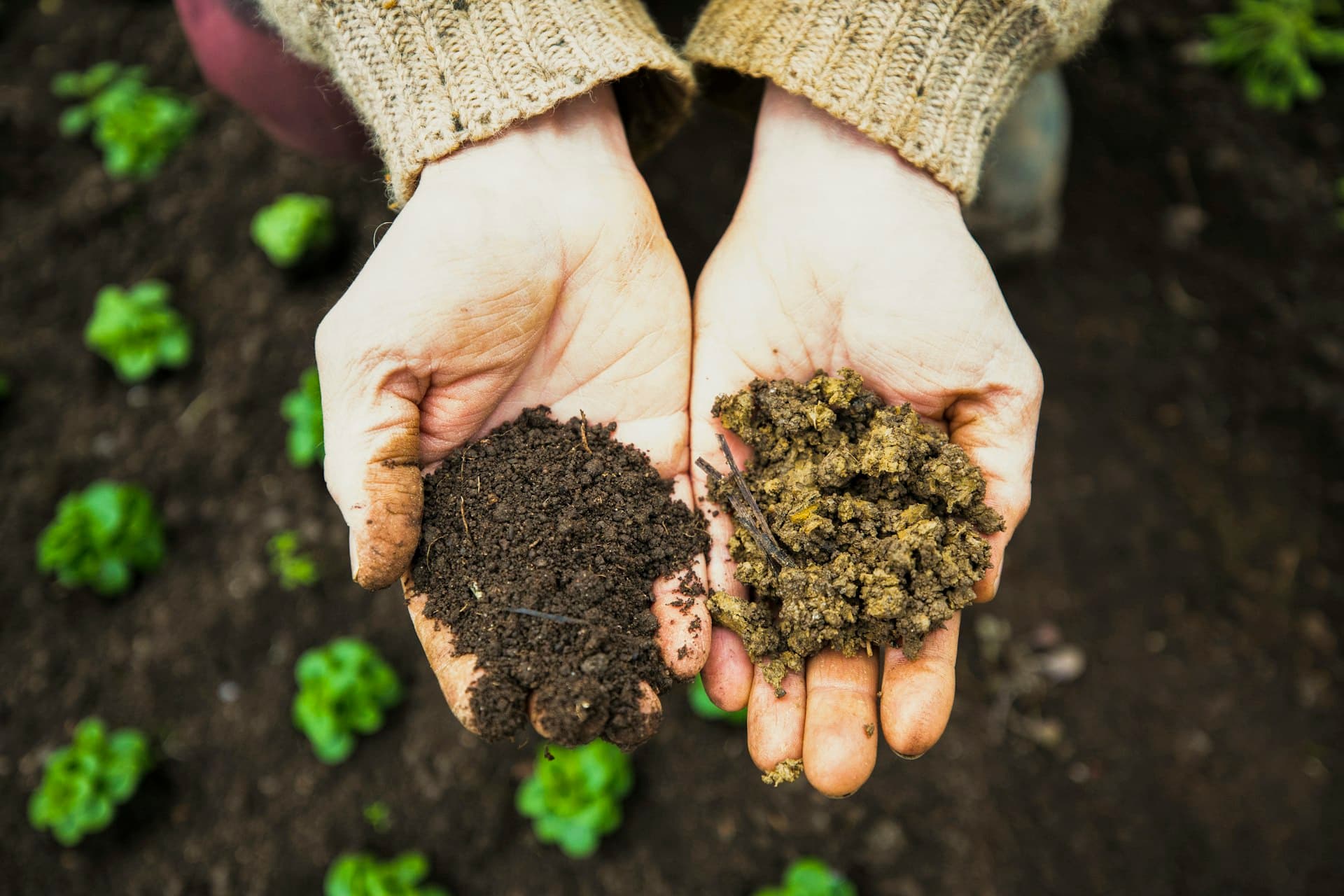
Everything in the bag is derived from living material: poultry manure, seaweed, bone meal, feather meal and similar. Nothing is available to the grass straight away. The nutrients are locked up in organic matter and have to be broken down by soil life before the roots can use them. Worth repeating: organic here is a description of origin, not a stamp of approval. There is no equivalent of food certification on a standard lawn feed bag, so treat the word as chemistry, not virtue.
Organic-based feeds
The practical middle ground, and the type I use on the lawns I treat. The bulk of the bag is organic material, with a smaller mineral component blended in so the lawn gets a modest early response while the organic fraction gets to work in the background. You get most of the soil benefits of a true organic feed without the month-long wait for anything visible to happen.
How an organic-based feed actually works
A mineral feed skips the soil entirely: salts dissolve, roots drink, job done. An organic-based feed takes the long way round, and that detour is the whole point.
The organic fraction is food for soil microbes, not grass. Bacteria and fungi digest the organic matter and release the nitrogen it contains gradually, typically over two to three months rather than two to three weeks. Because microbes work faster in warm, moist soil and slower in cold or bone-dry soil, the release rate roughly tracks the conditions grass actually grows in. The feed speeds up when the lawn can use it and slows down when it cannot. A mineral feed has no such brake.
There is a second effect that compounds quietly in the background. Every application adds organic matter and feeds the soil ecosystem: more microbial activity, more worm activity, better crumb structure. On the heavy clay we garden on across most of Essex, that slow structural improvement is worth as much as the nutrients. Clay that has been fed organically for a few seasons drains better in winter and holds moisture longer in summer, which is exactly the combination this year's weather has been punishing lawns for lacking.
What you notice on the lawn
The differences are visible, but they are the quiet kind:
- Steadier colour. No fluorescent two-week flush followed by a fade. The lawn holds a consistent, natural green between visits.
- Less surge growth. Because nitrogen arrives gradually, you do not get the explosion of soft top growth that follows a fast mineral feed. In practice that means less mowing and fewer clippings, and the growth you do get is harder-wearing.
- Much lower scorch risk. With no heavy salt load in the granules, an organic-based feed is far more forgiving of overlaps, uneven spreading and dry spells. In a summer like this one, that safety margin matters.
- A soil that improves year on year. This is the one you cannot see in week two but absolutely see in year two: better rooting, better drought recovery, and thicker turf that needs less rescuing.
The honest trade-offs
I use these feeds on every lawn in my programme, so take this as informed rather than grudging.
- Slower initial green-up. If the mineral component gives you a lift within a couple of weeks, the full effect takes a month or more to build. A pure mineral feed will beat it in a before-and-after photo taken ten days apart. It will usually lose the comparison taken ten weeks apart.
- It costs a little more. Organic material is bulkier and more expensive to produce than nutrient salts, and that shows in the price per bag. You claw some of it back in fewer applications and less mowing, but the upfront cost is genuinely higher.
- The first season is the least impressive. The soil benefits compound. Season one looks good; season three looks like a different lawn. If you want a transformation by the weekend, this is the wrong tool.
- Some smell for a few days. Feeds built on poultry manure announce themselves after application, especially in warm weather. It fades within a week, but it is real.
None of these are reasons to avoid organic-based feeding. They are reasons to start it with the right expectations.
Not sure what your lawn actually needs before you buy anything? A free lawn survey will tell you what is going on under the surface, with no obligation. Book a free lawn survey
Using an organic-based feed yourself
If you are doing your own feeding, an organic-based feed is honestly the easier product to live with, precisely because it is so forgiving. A few rules keep it simple:
- Get the timing right. Feed when the grass is actively growing, which in the UK broadly means spring through autumn, with the products matched to the season. The full calendar is in our guide to the best time to feed a lawn in the UK.
- Follow the rate on the bag. Rates vary between products, so calibrate your spreader on a small test area first rather than trusting a setting from the internet. Even with the low scorch risk, doubling the rate does not double the result.
- Apply before rain if you can. The microbial release needs soil moisture to get moving. In a dry spell like this July, hold off until rain is genuinely forecast rather than feeding a drought-stressed lawn, and follow the advice in our dry summer watering guide in the meantime.
- Buy once, apply twice. A bag of a decent organic-based lawn feed typically covers a modest lawn for two applications, so weigh out what the rate says you need rather than emptying the bag in one go.
Why organic-based feeds are the backbone at Greener
Everything about how these feeds behave fits the way I want to look after lawns. Steady, even growth suits a visit programme far better than boom-and-bust flushes. The near-zero scorch risk means a feed applied before an unexpected dry fortnight is a non-event rather than a callback. And the soil improvement compounds in exactly the direction Essex clay needs: better structure, better drainage in winter, better moisture holding in summer.
It also fits what the business stands for: eco-friendlier lawn care with less chemicals, done properly rather than performatively. I will be straight with you about what that does not mean. I do not claim the programme is 100 percent organic, because it is not. Where a lawn needs a targeted mineral nutrient or a spot-treated weed application, I use it, carefully and minimally. Organic-based feeds are the backbone of The Treatment Plan, the default choice at every seasonal visit, and the reason plan lawns tend to look consistently good in October rather than briefly spectacular in May.
That is the honest pitch: not a miracle in a bag, but a feeding approach that leaves the soil better every single year it runs.
One sentence to take to the garden centre: organic on a feed bag means where the nutrients come from, organic-based means the soil gets fed as well as the grass, and the results are slower, steadier, and better value by year two.
Want help with your lawn?
Book a free lawn survey and we'll take a look at your lawn. No obligation, honest advice.