Best Time to Feed Your Lawn (UK Seasonal Guide)
By Greener Lawn Care - 21 July 2026 - 8 min read
Feeding is the biggest lever you have on how a lawn looks, and when you feed matters more than which bag you buy. Get the rhythm right and the grass stays thick, green and able to crowd out weeds and moss largely on its own. Get it wrong, and in a July like this one the classic mistake is feeding a drought-stressed lawn, which can leave it worse than doing nothing at all. Here is the seasonal rhythm I work to on the lawns I treat around Colchester.
The short answer
Feed an established UK lawn three or four times a year: a spring wake-up feed once the grass is actively growing, usually late March or April, then a lighter summer feed only when the soil has moisture, then an autumn feed in September or October that is lower in nitrogen and higher in potassium to harden the lawn for winter. Never feed a lawn that is brown and drought-stressed, which right now means most unwatered lawns in Essex. Wait for rain to return and the grass to green up first.
Spring: the wake-up feed
The spring feed starts the season, but the date on the calendar is not the trigger. The grass is. Feed once the lawn is actively growing again, which in Essex usually means late March into April, when the soil has warmed and you find yourself mowing weekly rather than monthly.
Feed earlier than that and most of it is wasted. Dormant grass takes up very little, so a February feed sits in cold, wet soil doing nothing useful until winter rain washes it past the roots. Moss, which grows happily in cold conditions, is often the only thing in the lawn that benefits.
The spring feed itself should be a balanced granular feed with a decent amount of nitrogen. Nitrogen drives leaf growth and colour, and after winter that is exactly what the lawn needs: fresh leaf to rebuild density before the weeds wake up and start competing for the gaps.
Summer: lighter, and only when there is moisture
By June the spring feed has run its course, and a summer feed keeps the lawn ticking over through the main growing months. Two things change from spring: the dose comes down, and the moisture rule takes over.
A summer feed should be lighter in nitrogen than the spring one. Grass in summer heat does not want to be forced into soft, lush growth that it then has to keep alive through hot afternoons. It wants a steady maintenance ration.
The moisture rule is non-negotiable. Granular feed needs water to break down and reach the roots. Only feed in summer when the soil is genuinely moist and there is rain in the forecast, or when you are watering properly: deep soaks once or twice a week, in the morning, never in the evening, as covered in our watering guide. A lawn that is being watered well can take a light summer feed. A dry one cannot, which brings us to this July.
Why feeding in a heatwave does more harm than good
After three heatwaves and months of dry weather, plenty of Essex lawns are brown and crisp right now. Feeding one of them is actively harmful, for three reasons.
First, most fertilisers are salts. Spread onto dry soil, they pull moisture out of the grass plants instead of feeding them, which is why badly timed feed shows up as scorched stripes and patches within days.
Second, nitrogen is an instruction to grow. A drought-stressed lawn has deliberately shut down leaf growth to protect its roots and crowns. Telling it to push out soft new leaf when there is no water to support that growth works directly against the plant's own survival strategy.
Third, granules that cannot dissolve simply sit on the surface. When rain finally arrives, weeks of stored feed can release in one hit, which is another route to scorch and a flush of weak, disease-prone growth.
A brown lawn in July is dormant, not hungry. Leave the bag in the shed, stay off the grass as much as you can, and follow the recovery steps in our summer lawn care guide. The feed it actually needs is the autumn one.
Autumn: the feed most people skip
The September or October feed does more for how your lawn looks next spring than anything else you apply all year, and it is the one most homeowners never get round to.
An autumn feed is deliberately different from a spring one: lower in nitrogen, higher in potassium. Potassium toughens the grass at cell level, improving its tolerance of cold, disease and the following summer's drought, and it supports root growth through the mild autumn weeks so the lawn goes into winter on a stronger footing rather than a leafier one.
Do not use up leftover spring feed in autumn. High nitrogen in October forces soft, sappy growth at exactly the time of year when cool, damp nights let fungal diseases take hold. A lawn pushed with nitrogen into winter often comes out of it patchy and sick. From November to February the lawn wants nothing from the bag at all.
Not sure what your lawn actually needs this year? A free lawn survey will tell you exactly where it stands, with no obligation. Book a free lawn survey
Granular or liquid, in plain terms
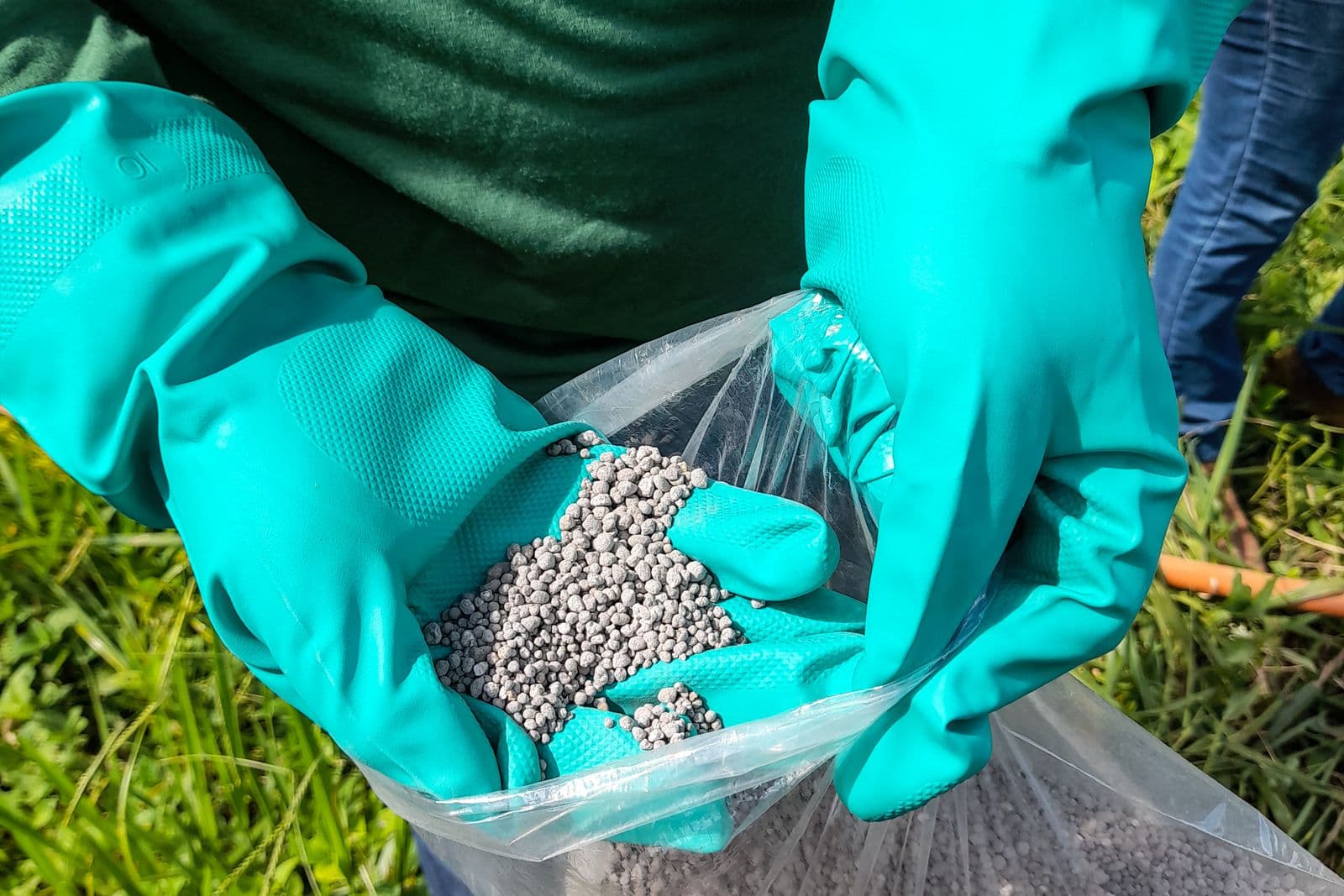
Granular feed is the backbone of any feeding programme. The pellets sit in the sward, break down with moisture, and release nutrients over several weeks, longer for slow-release types. One application covers a season's stage. The catch is that evenness matters as much as the product, so it is a job for a broadcast spreader rather than a gloved hand, which almost always produces stripes. Follow the rate printed on the bag and calibrate on a small test area first rather than guessing.
Liquid feed is dissolved in water and applied through a sprayer or watering can. It is taken up through leaf and roots within days, so it is the tool for a quick green-up, but it does not last, so you reapply far more often. It also needs no rain to activate, which makes it the safer of the two in a dry spell where you are still watering.
The plain-terms version: granular is the proper meal, liquid is the espresso. Most lawns want granular feeds as the programme and liquid only as an occasional top-up or tonic between them.
Little and often beats one big annual dose
The most common feeding pattern I see is one enthusiastic heavy dose in spring and nothing for the rest of the year. It is worse than it sounds. A big single dose produces a surge of soft growth and a mowing workload to match, carries a real scorch risk, and much of the nitrogen leaches past the roots before the grass can use it. By July the lawn is hungry again, thins out, and the weeds and moss take the vacancy.
Grass grows more or less continuously from March to October, so it wants a steady, modest supply across the whole season, not a January-sales binge. Three or four sensibly sized feeds spaced through the year deliver steadier colour, denser turf and far less risk than one heavy hit. A slow-release organic-based lawn feed suits this approach particularly well: it releases gently over a couple of months, feeds the soil biology as well as the grass, and is much more forgiving if your spreading is slightly uneven.
How we handle feeding at Greener
Feeding is the backbone of our lawn treatment visits. I use organic-based granular feeds through the season, with the analysis changing to match the rhythm above: a wake-up feed in spring, a lighter summer application, and an autumn feed that hardens the lawn off for winter. Organic-based feeds release more gently than straight synthetic granules, which keeps scorch risk low in the weeks when I cannot control what the weather does next.
The other half of the job is judgement. A calendar says feed in July. The lawns say otherwise this year, so where a lawn is drought-stressed I hold the summer feed back and catch it up once the weather breaks. That flexibility is built into The Treatment Plan, which covers the year's feeds, weed control and moss control. A renovation booked alongside it, timed for spring or autumn, means each feed lands on a lawn thick enough to make the most of it.
The rhythm to remember: feed when the grass is growing and the soil is moist, go lighter in summer, harden the lawn off in autumn, and never feed a lawn that is fighting its way through a heatwave.
Want help with your lawn?
Book a free lawn survey and we'll take a look at your lawn. No obligation, honest advice.