Eco-Friendlier Lawn Care: What It Actually Looks Like
By Greener Lawn Care - 25 July 2026 - 8 min read
"Eco" is the most stretched word in lawn care right now. Every van suddenly has a leaf on it, every treatment programme is "green", and very little of it survives a follow-up question. I run a lawn care business in Essex built on the eco-friendlier idea, so I have skin in this game, and I still think most of what gets sold as eco lawn care in the UK is marketing first and method second. Here is what the phrase honestly means, where its limits are, and how to spot the difference when someone is quoting for your lawn.
The short answer
Genuinely eco-friendlier lawn care comes down to four things you can check: organic-based feeds that feed the soil rather than just greening the grass, weed control spot-treated onto individual weeds instead of blanket sprayed across the whole lawn, moss control that fixes the causes instead of repeating the same treatment every year, and lower-emission ways of doing the work, like an electric van. What it never honestly means is chemical-free. Nobody maintains a striped, weed-free lawn with zero chemicals, and anyone claiming to is either overpromising or quietly spraying more than the leaflet suggests.
Where the greenwash creeps in
Lawn care has always been a chemicals trade. The traditional model, and it is still the standard model at the national franchises, is round-based: a visit every couple of months, with fertiliser and weed control applied across the whole lawn on most of those rounds, whether or not there is a weed problem to treat. It is efficient and predictable, and it puts a lot of product on a lot of grass that did not need it.
When a company running that model paints the van green, four questions cut through the branding:
- What is in the feeds? Organic-based products, or the same synthetic fertiliser in a greener bag?
- How is weed control applied? To individual weeds, or sprayed over the entire lawn? As needed, or on every visit by default?
- What does moss control involve beyond killing the moss that is visible today?
- What does "eco" actually describe? The method, the van, or just the logo?
If the answers are vague, you have your answer. The rest of this article is what good answers look like.
Organic-based feeds: feed the soil, not just the leaf
Conventional lawn fertiliser is built for speed. Synthetic, fast-release nutrients give you a rapid green-up and a surge of growth, then not much else. The grass looks good for a few weeks, you mow twice as often, and the soil underneath gets nothing out of the deal.
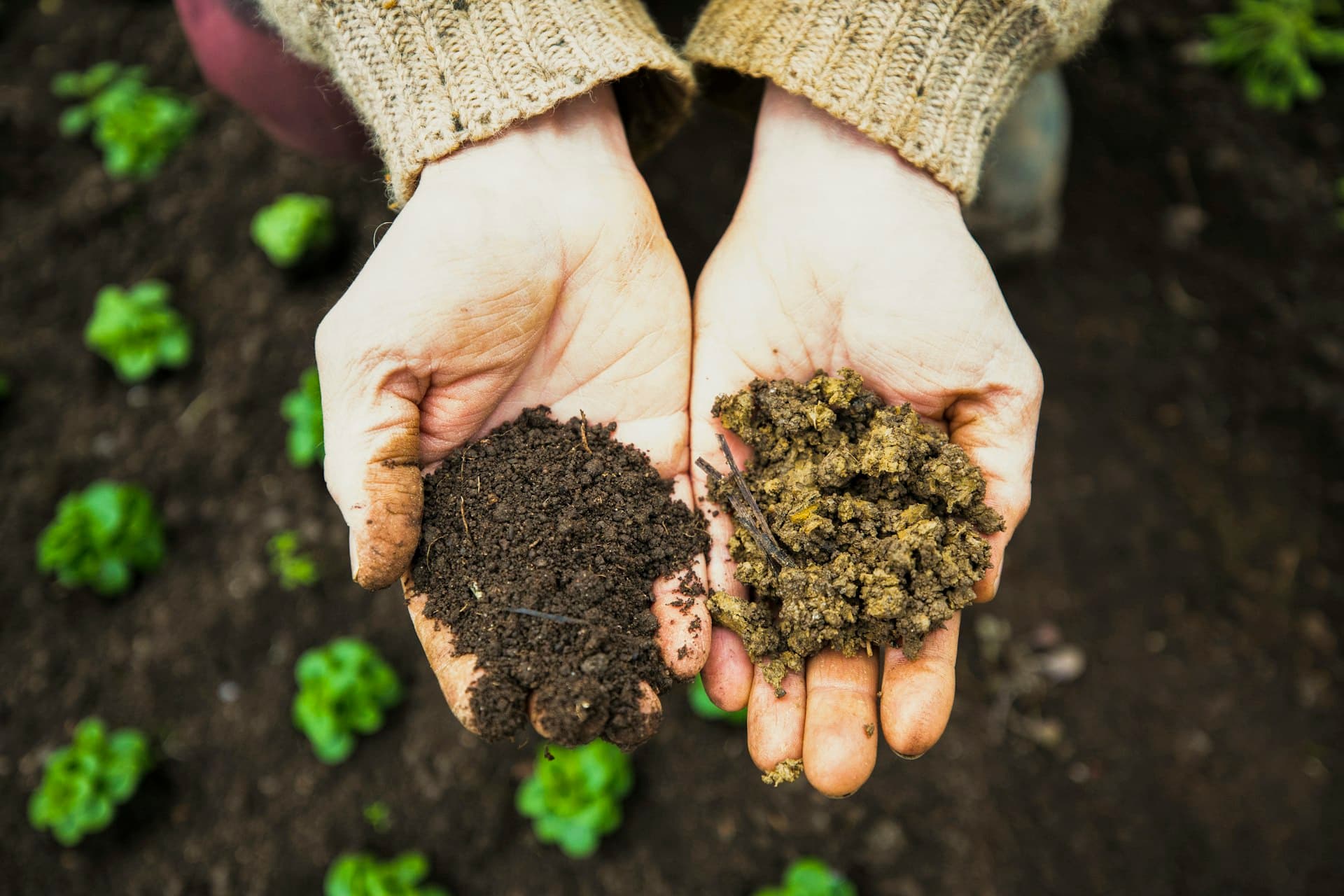
Organic-based feeds work differently. They combine organic matter with measured nutrients, so they feed the soil biology as well as the plant. Earthworms and soil microbes get something to work on, soil structure gradually improves, and the lawn holds moisture better, which matters enormously on Essex clay in a summer like this one, where lawns have baked through three heatwaves. The colour comes on more slowly, but it is steadier, and you avoid the boom-and-bust growth cycle that stresses grass and mower alike.
The honest caveat: "organic-based" is the accurate phrase, not "100% organic". A well-designed programme still includes measured mineral nutrition where the lawn genuinely needs it, because an underfed lawn thins out, and thin lawns invite the moss and weeds you then have to treat. Feeding the lawn properly is itself a chemical-reduction strategy. That nuance is exactly the kind of thing a genuinely eco-minded provider will explain rather than hide.
Weed control: spot treatment, not blanket spraying
This is the single biggest practical difference between eco-friendlier lawn care and the default. Blanket spraying, where a selective weedkiller goes across the entire lawn, is the industry norm because it is fast. Spot treatment means walking the lawn and applying the product to each weed individually. It takes longer, it puts a small fraction of the chemical down, and the grass around each weed never gets doused in something it did not need. The weed gets treated, the lawn does not. That is how I run weed control on every lawn I look after.
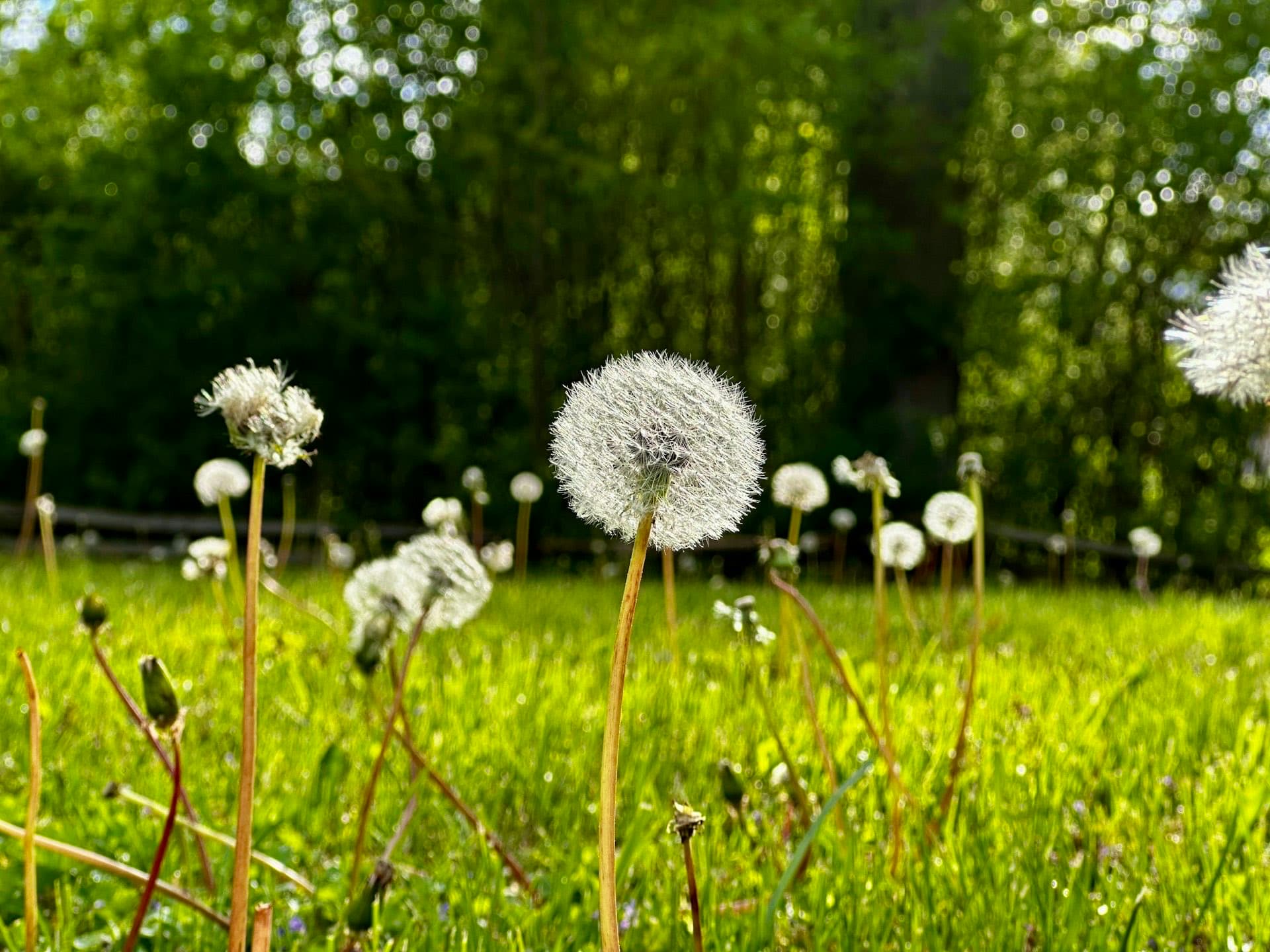
And here is the honest part: a targeted herbicide is sometimes the right tool, and pretending otherwise helps nobody. Established perennial weeds like dandelions, docks and plantains have deep tap roots. Pull them by hand and they regrow from the fragment left behind. A precise dose of selective weedkiller travels down to the root and kills the whole plant, which makes it the least wasteful option for that job. If your lawn only has a handful of weeds, hand weeding is free and works, provided you get the root out. Beyond that, spot treatment wins.
Timing matters too. Weeds only take up herbicide while they are actively growing, which in the UK means spring to early autumn. Anyone spraying weeds in late autumn or winter is putting chemical down for no result. I hold the professional spraying certificates (PA1 and PA6), and most of that training is about exactly this: applying the minimum amount, accurately, at the right time, and keeping it where it is meant to be.
Moss control: fix the causes or repeat forever
Moss is the clearest example of the treadmill. The standard industry pattern is a moss killer every spring, a good-looking lawn by summer, and the moss back by late autumn, because nothing about the lawn changed. That cycle sells a lot of product year after year, which is precisely why it persists.
Moss does not invade healthy turf. It fills the gaps where grass is already struggling: shade, compacted soil, poor drainage, thin growth, mowing too short. The eco-friendlier approach treats the moss that is there, then goes after those conditions: aeration for compaction, overseeding for thin patches, a higher cut, proper feeding. Each year the lawn needs less intervention than the year before. Fewer treatments is the real eco win, and it is cheaper for the customer too. That cause-first thinking is the whole basis of our moss control approach, and the full step-by-step is in my moss removal guide.
Not sure which of these your lawn actually needs? A free lawn survey gets you straight answers rather than a standard sales script. Book a free lawn survey
The electric van, and what it does not fix
Every visit I make is in an electric van. It is genuinely lower emissions per visit than a diesel, and it is quieter, which your neighbours appreciate at half past seven in the morning. It is not zero-carbon, because it charges from the grid, and I am not going to dress it up as more than it is.
Same honesty applies to the machinery. Some of the heavier renovation kit still runs on petrol, because the battery versions cannot yet get through a full scarification day on a big lawn. When battery equipment can do the job properly, I will switch, because I would rather charge overnight than queue for fuel. Until then, the claim is "electric van", not "all-electric operation". Eco-friendlier means choosing the lower-impact option everywhere it genuinely works, not pretending the impact is zero.
What eco-friendlier is not
Worth saying plainly, because this is where the greenwashing usually lives:
- A striped lawn is not a wildflower meadow. A fine lawn is a managed environment, and managing it has a footprint. If maximum biodiversity is your actual goal, giving part of the garden over to a meadow area or a clover lawn will do more than any treatment programme, and I will tell you that at a survey.
- It is not chemical-free. Some jobs are best done with a small, targeted dose of the right product. The eco question is not "chemicals, yes or no" but "how little, how precisely, and to what end".
- It is not an all-or-nothing badge. "Less chemicals" is a practice you can verify on any visit. "No chemicals" alongside a promise of a weed-free striped lawn is a story, and the numbers behind it never add up.
The comparative claim is the trustworthy one. That is why I say eco-friendlier, not eco-friendly.
How we handle this at Greener
Everything above is the business, not a bolt-on. The about page says it in one line: we are not chemical-free, and we are not going to pretend we are. What we have done is make considered choices at every step: organic-based feeds through the season, weed control spot-treated as standard rather than blanket sprayed, moss control aimed at causes so the lawn needs less each year, and an electric van doing the miles.
The structure supports it too. The Treatment Plan pairs with a lawn renovation, booked as a one-off for spring or autumn, because thick, healthy turf is the best chemical reduction there is: it crowds out the weeds and moss you would otherwise be treating. Every lawn benefits from one each year for the very best result. And if your lawn does not need a treatment on a given visit, it does not get one. That is not generosity, it is the whole point.
Eco-friendlier is a comparative, and that is exactly the point: less product, better soil, lower emissions, and no pretending otherwise. Hold any lawn company to that standard, including mine.
Want help with your lawn?
Book a free lawn survey and we'll take a look at your lawn. No obligation, honest advice.