How to Get Rid of Moss in Your Lawn (UK Guide)
By Greener Lawn Care - 1 March 2026 - 9 min read
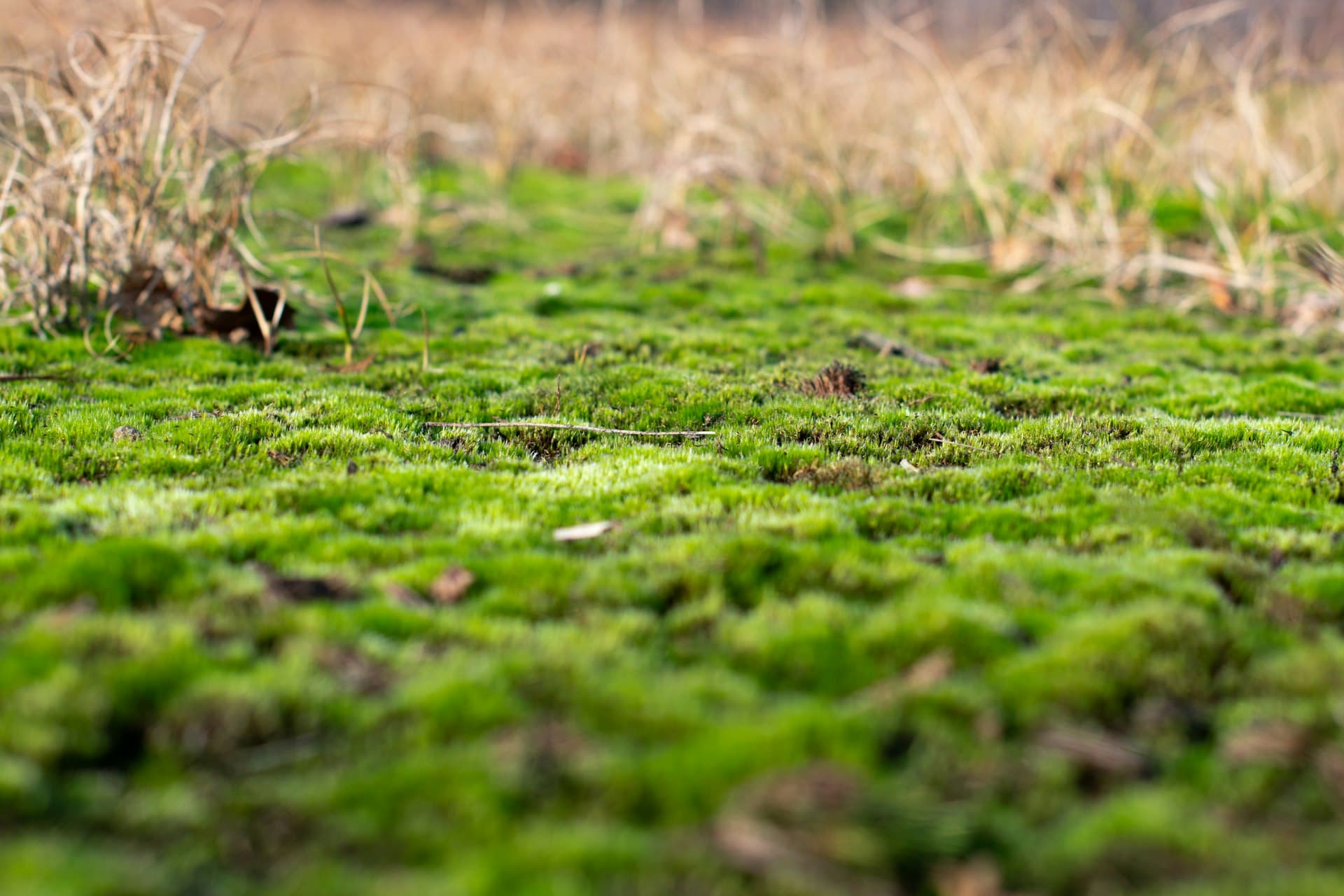
If your lawn has turned into a spongy green carpet over winter, you are dealing with moss. It is the single most common lawn complaint in the UK, and here in Essex, our heavy clay soil makes it even more likely. The good news: it is fixable, and you do not need to rip up the whole lawn to do it.
The short answer
Treat the moss in autumn or early spring, wait for it to die back, scarify to remove the dead material, then overseed the bare patches left behind. That deals with the visible moss. To stop it coming back, you need to fix the underlying conditions that caused it: compaction, poor drainage, shade, weak grass, or a combination of all four. How quickly the moss dies depends on the treatment: an iron-based moss killer blackens it in a couple of weeks, while a bacteria-based product works more slowly and digests the moss away over a couple of months.
Why moss grows in your lawn
Moss does not appear randomly. It moves into areas where grass is already struggling. The most common causes are:
- Shade from trees, fences, or buildings that blocks sunlight
- Poor drainage leaving the soil waterlogged for extended periods
- Compacted soil from foot traffic, play areas, or heavy clay
- Low soil pH creating acidic conditions that favour moss over grass
- Weak, thin grass from mowing too short or not feeding regularly
- Thatch build-up trapping moisture at the surface
Moss does not kill grass. It fills the gaps where grass is already struggling. Fix the conditions, and you fix the moss.
Moss turns up to some degree in almost every UK lawn, and the RHS notes it takes hold wherever grass growth is sparse or weak. Lawns on heavy clay or in shaded gardens are particularly susceptible. If several of those causes apply to your lawn at once, moss will keep returning until you address them as a group, not one at a time.
When to treat moss (UK timing)
There are two effective treatment windows in the UK:
- Autumn (September to November): The best window. Soil is still warm, autumn rain helps recovery, and you can scarify and overseed with time for the new grass to establish before winter dormancy. Autumn scarification gives the lawn 6-8 weeks of growing conditions to recover.
- Early spring (March to April): The secondary window. Useful if moss became severe over winter, but recovery is slower because weed seeds also germinate alongside new grass seed in spring.
Avoid treating in summer heat (the lawn is already under drought stress) or deep winter (grass is dormant and cannot recover). If you are planning a full autumn scarification, treat the moss at least two weeks before so it is dead and ready to remove.
Step-by-step moss removal
Step 1: Apply a moss treatment
Two main options are available:
Ferrous sulphate (iron sulphate): The traditional and most widely used option. It starts blackening moss within days and gives the grass a temporary deep green boost from the iron, but the RHS notes it can take two to three weeks for moss to die back fully. Handle it with care: it stains paths, patios, and clothing on contact, so accurate application matters more than speed.
Bacteria-based organic moss removers: The gentler alternative on garden centre shelves. Rather than scorching the moss, they use beneficial bacteria to digest it, so the process is much slower and works on a different timescale: the moss browns off after roughly two to three weeks, thins out noticeably by six to eight weeks, and is broken down into the soil over eight to ten weeks. The payoff for that slower pace is that there is usually no need to rake or scarify the dead moss out, there is no staining risk on paths and patios, and the lawn gets fed at the same time.
Both work when applied correctly, but they suit different plans. Iron is faster and more visible, and it pairs with the scarify-and-overseed renovation described below, which is the route most tired lawns need. A bacterial product is slower and lower-effort, better suited to a lawn that is broadly healthy and just needs the moss easing out gradually without a full renovation. The step-by-step that follows is the iron-and-scarification approach. Read more about our moss control approach.
Step 2: Wait before removing
This step is where most people go wrong. After an iron-based moss killer you need to wait until the moss has blackened and died back fully, typically two to three weeks, before touching it. If you rake or scarify too early, you drag live moss fragments and spores across the lawn and make the problem worse. Patience here saves weeks of frustration later. (If you have gone the bacterial route instead, there is nothing to rake: the bacteria break the moss down for you, so you skip straight past the scarifying.)
Not sure how severe your moss problem is? A free lawn survey will give you a clear picture of what is going on and what it will take to fix it. Book a free lawn survey
Step 3: Scarify to remove dead moss
Once the moss is dead, mechanical scarification removes it from the lawn. This is not a gentle rake. A proper scarification uses vertical blades that cut into the turf, pulling out dead moss, thatch, and organic debris. Two passes at different angles is the minimum for a thorough job.
The lawn will look terrible immediately after scarification. Bare soil, thin patches, an overall battered appearance. This is completely normal and part of the process. Do not panic.
Step 4: Overseed bare patches
The gaps left after scarification are an invitation for moss and weeds to return if you leave them empty. Overseeding immediately after scarification fills those gaps with new grass. Choose a seed mix suited to your lawn's conditions (shade-tolerant for shady gardens, hard-wearing for family lawns).
In warm, moist autumn soil, grass seed germinates within 7-14 days and starts filling in within 3-4 weeks.
How to stop moss coming back
One-off moss treatments are a temporary fix. If you do not address the root causes, the moss returns every single year. Here is what actually prevents it long-term:
- Aerate annually to break up compaction and improve drainage. Hollow-tine aeration in autumn is ideal for clay soils.
- Feed regularly with a proper programme through the growing season. A well-fed lawn is thick enough to crowd out moss naturally. The Treatment Plan covers this with the right products at the right times.
- Raise your mowing height to at least 35mm. Scalping the lawn weakens the grass and creates bare patches where moss moves in.
- Improve drainage in persistently wet areas. Sometimes this means spiking, sometimes topdressing with sharp sand, and occasionally it means addressing a deeper drainage issue.
- Overseed thin patches whenever they appear, not just after scarification. Bare soil is an open invitation for moss.
The common pattern I see is homeowners treating moss every spring, feeling good about it for a few months, then watching it return every autumn. That cycle only breaks when you tackle the underlying conditions.
Essex lawns and moss: why clay soil makes it worse
Essex sits on some of the heaviest clay soil in the south-east. This creates near-perfect conditions for moss:
- Water retention: Clay holds moisture for far longer than sandy or loamy soils. After autumn and winter rain, lawns can stay waterlogged for weeks.
- Compaction: Clay compacts easily under foot traffic, garden furniture, or even its own weight when wet. Compacted soil has no air pockets, so grass roots suffocate and thin out.
- Seasonal extremes: In winter, Essex clay is cold and saturated. In summer, it bakes hard and cracks. Neither extreme is good for grass, but moss thrives in the wet half of that cycle.
Practically, this means aeration is more important on Essex lawns than on lighter soils. Annual hollow-tine aeration in autumn, combined with topdressing, gradually improves the soil structure and drainage over time. It is not a one-year fix, but by the second or third autumn you see a genuine difference in how the lawn handles winter.
For a complete spring recovery plan after dealing with moss over winter, see our spring lawn care checklist.
How we handle moss at Greener
On the lawns I treat, moss control is a sequence rather than a product in a bottle: treat the moss, scarify out the dead material once it has died back, then aerate and overseed so the conditions that caused it are actually fixed. The treatment itself is matched to the lawn and the season, and applied carefully so paths and patios stay clean. Moss that is removed and then crowded out by thicker grass stays gone far longer than moss that is only killed.
The Treatment Plan treats the moss and feeds the lawn through the year. A lawn renovation, booked alongside the plan as a one-off and timed for spring or autumn, fixes the causes: it keeps thatch levels down and the turf thick enough to resist moss naturally. Every lawn benefits from one each year for the very best result, and combined with the seasonal feeding programme, the lawn builds its own defence.
I am honest about what this approach involves: it is a long-term strategy, not a quick fix. If your lawn has had severe moss for several years, the first year of treatment is about recovery. By the second year, you start to see the moss pressure drop. By the third, most lawns are genuinely moss-resistant without needing heavy annual intervention.
Moss is frustrating, but it is not a mystery. It grows where conditions favour it over grass. Change those conditions, and the grass wins.
Want help with your lawn?
Book a free lawn survey and we'll take a look at your lawn. No obligation, honest advice.