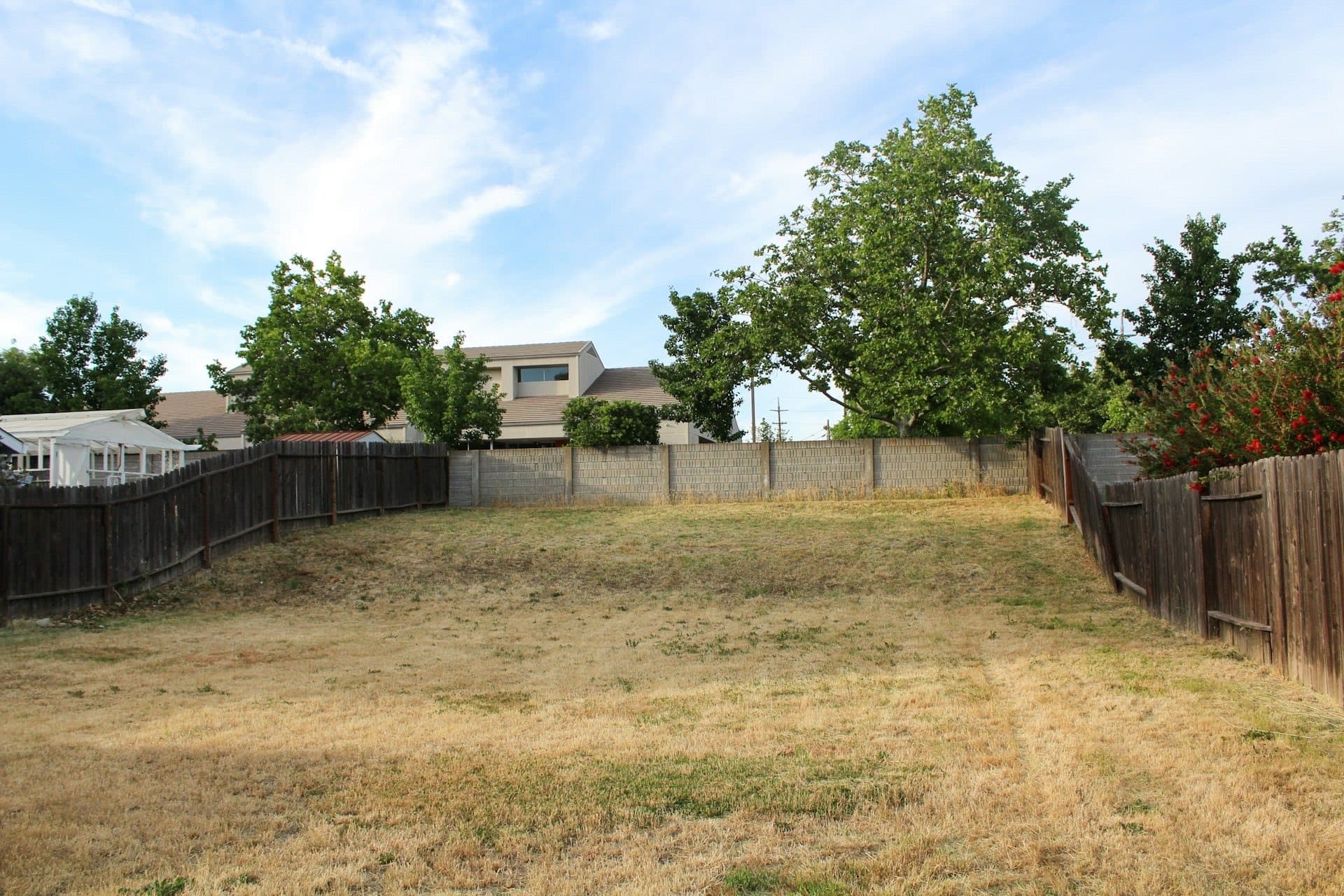
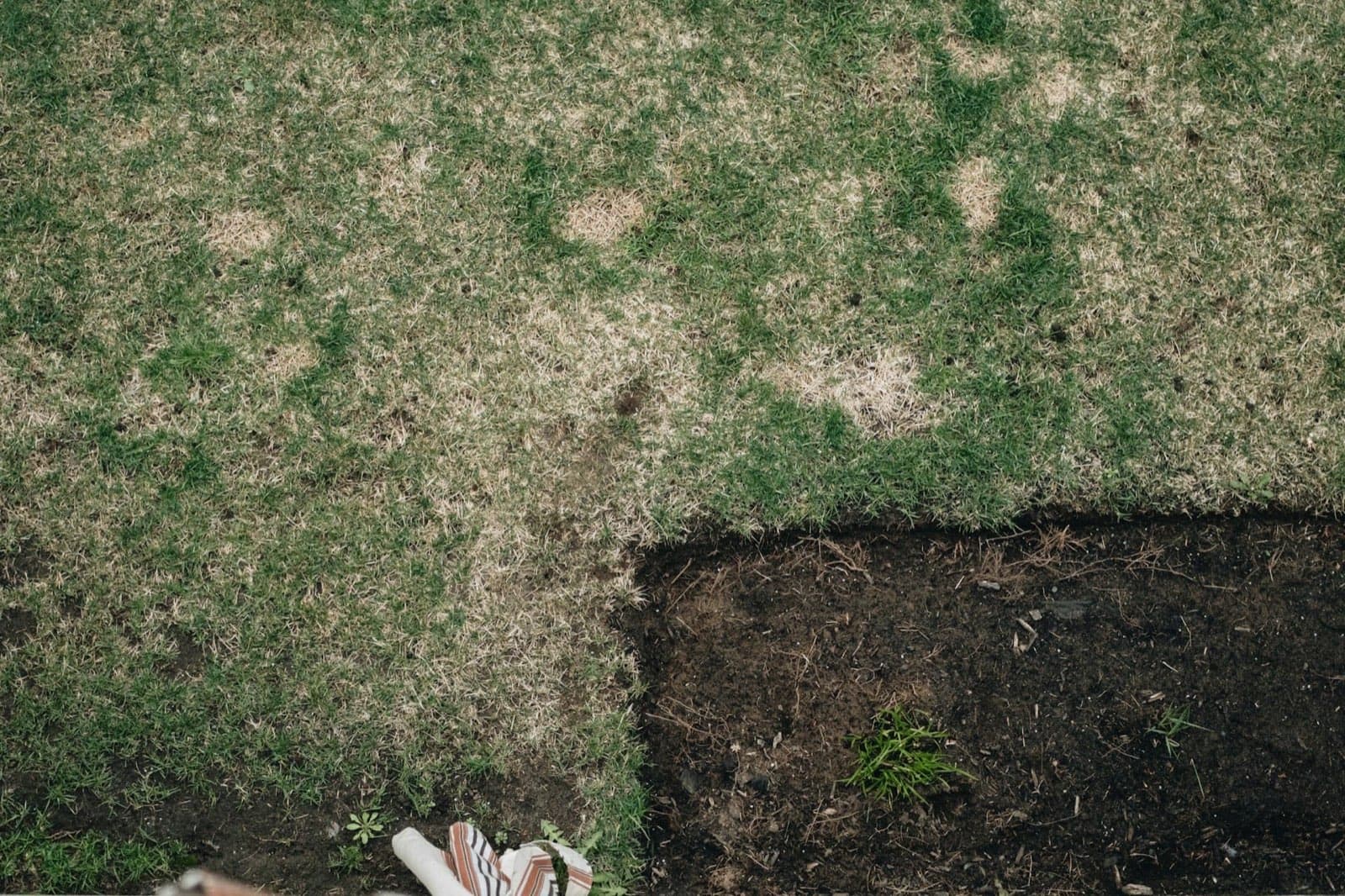
After three heatwaves and months without proper rain, most lawns around Colchester are carrying a few scars: a brown ring where the dog goes, a bald strip along the route to the shed, a scorched rectangle where the paddling pool stood. The question I get every week at the moment is the same: can I fix this now? Here is the honest answer, and the plan that works.
The short answer
Almost every bare patch is repaired the same way: rake out the dead material, loosen the soil, sow seed, and keep it moist until the new grass is established. The problem in July 2026 is timing. Seed sown into hot, baked soil either sits there doing nothing or germinates and dies within days, so a mid-summer repair in a drought year is mostly wasted seed. Work out what caused each patch, stop it getting worse now, and do the actual repair in early September when the soil is still warm but the rain has returned.
Why lawns get bare patches
A bare patch is a symptom, not the problem. Before you repair anything, work out what killed the grass in that spot, because the cause decides whether the repair lasts. The usual suspects on the lawns I treat:
- Wear. The most common by far. Desire lines to the shed or washing line, goalmouths, the circle under the trampoline. Grass tolerates a surprising amount of traffic when it is growing strongly, and almost none when it is drought-stressed.
- Dog urine. Concentrated nitrogen burns the grass, leaving a dead centre with a ring of darker green around it. It is worse in a dry summer because there is no rain to wash it through.
- Drought scorch. Full sun, shallow soil over rubble, and the strips along paths and patios where heat radiates back. These brown first and deepest.
- Scalping. Mowing too short over bumps and high spots shaves the grass down to the crown, leaving straw-coloured patches in the same places every time you mow.
- Shade. Under trees and close to fences, grass thins gradually rather than dying suddenly. By mid-summer the thin areas give up entirely.
Drought scorch deserves a closer look this year, because most of it is not actually bare. Brown grass in a heatwave is usually dormant, not dead. Part the grass and look for green at the base of the plants, then give a tuft a firm tug. If it resists, the roots are alive and it will recover on its own when the rain comes. Only if the plants pull away with no resistance and there is bare dust underneath do you have a genuine bare patch that needs seed. The full recovery playbook is in Brown lawn after a heatwave.
Why July is the wrong time to reseed, especially this year
Grass seed needs two things to establish: soil temperature and consistent moisture. Mid-summer gives you plenty of the first and none of the second. A germinating seedling has roots in the top centimetre of soil, exactly the layer that bakes dry by mid-morning in this weather. Keeping it alive means a fine spray of water every day, sometimes twice, for three to four weeks without missing one.
This summer makes that harder still. If your address is with Anglian Water, the hosepipe ban that started on 11 July takes sprinklers and hosepipes off the table completely. Watering a seeded patch by can, twice daily, for a month, in this heat, is a commitment most people will not sustain.
I renovate lawns in autumn and spring rather than fight July, and I would give a friend the same advice for a patch the size of a dinner plate. Sow it in September and it will catch up with, and then overtake, anything sown now.
What to do with the patches right now
Doing nothing beats seeding now, but a few things this month will stop the patches spreading.
- Take the traffic off. Move the trampoline and the paddling pool every week or two. If a desire line has worn through, vary the route or accept the argument is lost and plan stepping stones for the autumn.
- Mow high and less often. Lift the cut to 40mm or more and keep the blades sharp. Longer grass shades its own roots and stops the edges of each patch creeping outwards.
- Skip the feed and weedkiller. A drought-stressed lawn cannot use feed, and treatments on suffering grass do more harm than good. Both wait until the lawn is growing again.
- Dilute dog urine straight away. A watering can over the spot within a few hours washes the nitrogen through before it burns, and cans are fine even under the ban. This one habit prevents most new patches on dog lawns.
- If you water, water properly. Deep soaks once or twice a week, early in the morning and never in the evening, measured with a jam jar. The method is in our summer watering guide. Do not water the bare soil itself: there is no grass there to save, and damp bare soil in July mostly grows weed seedlings.
- Hand-pull weeds that move in. Pull what you can and do not worry about the rest: the autumn repair deals with them.
Not sure if your lawn needs patch repairs or a proper renovation? A free lawn survey will tell you either way, no obligation. Book a free lawn survey
The autumn repair, step by step
The window is early September to mid-October. The soil still holds summer warmth, the rain does the watering for you, and seed germinates in 7-14 days with 6-8 weeks of growing weather to toughen up before winter.
1. Rake out the dead material
Work a spring-tine rake (something like this one) firmly across the patch until the dead grass and debris are out and you can see soil. Rough up the surface while you are at it: seed needs to sit against loose soil, not on a hard cap.
2. Loosen the soil underneath
On our Essex clay, a summer like this one leaves the ground baked hard. Push a garden fork in across the patch and rock it to crack the crust, then rake the top couple of centimetres into a loose, crumbly tilth. If the patch was caused by compaction, this step is the actual fix. Skip it and the new grass sits on the same concrete that killed the old grass.
3. Sow the seed
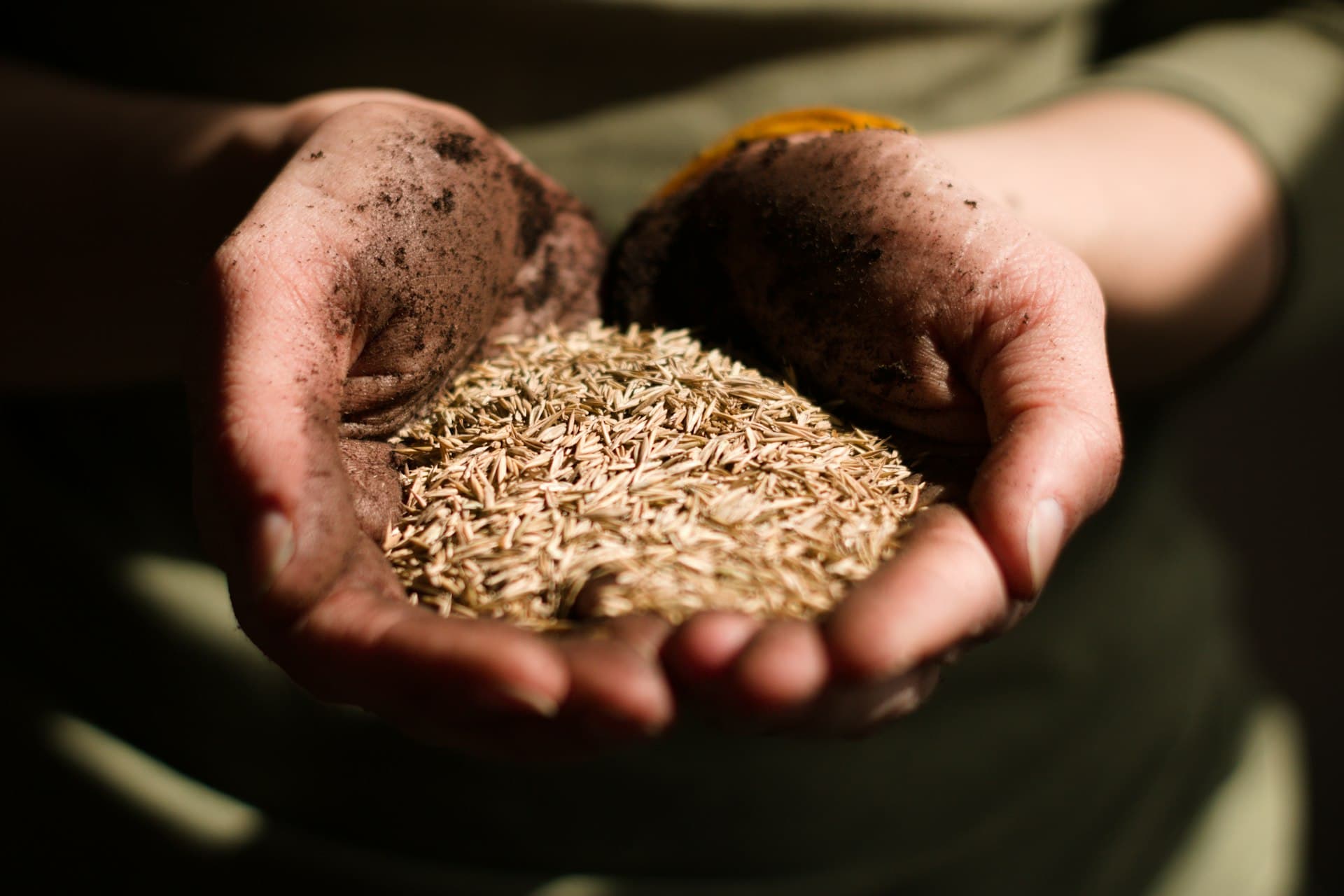
Follow the rate on the bag, which for bare soil is typically 40-50 grams per square metre, roughly a generous handful per patch. Match the blend to the cause: hard-wearing mixes for play areas and dog lawns, shade-tolerant blends under trees, and after a summer like this a drought-tolerant seed mix earns its place anywhere. Rake the seed lightly into the surface so it sits against the soil, then firm it down with your foot. Seed should be no more than a few millimetres deep. Buried seed fails as reliably as seed left sitting on top for the pigeons.
4. Keep it moist until it is grass
A fine spray each morning keeps the surface damp through germination, and in September the rain does most of it for you. Once the new grass is up, stretch the intervals and deepen the soaks to push the roots down. Keep feet and paws off for four to six weeks, and give it its first cut, set high, once it reaches the height of the lawn around it.
Stopping the patches coming back
A repair that ignores the cause is an annual subscription to the same job. Stepping stones solve desire lines permanently and look better than a mud strip. Trampolines and pools need moving regularly or siting off the lawn. Dogs can be trained to a gravel corner, or managed with the watering can habit. Scalped high spots want either a higher cut or the bump taken out. Deep shade is worth being honest about: some spots under dense trees will never hold a lawn, and ground cover planting beats reseeding the same circle every year.
The bigger picture is turf density. A thick, well-fed lawn closes over small injuries on its own. Regular feeding and an annual overseed are what build that density, which is why patches on a maintained lawn tend to be a one-year problem rather than a permanent feature.
How we handle bare patches at Greener
For customers on The Treatment Plan, a renovation is booked alongside the plan as a one-off, timed for spring or autumn, and every lawn benefits from one each year for the very best result. That scarification and overseeding pass repairs the summer's bare patches as part of the job: the machine rakes out the dead material across the whole lawn, fresh seed goes into every thin and bare area, and the feeding programme carries the new grass through to winter. After the summer we have just had, that autumn visit is going to matter more than usual.
I will be straight about the DIY route: a couple of dinner-plate patches are a satisfying Saturday job, and a bag of seed and a rake is all it takes. Where it tips into professional territory is scale: when a lawn is more patch than lawn, or the same areas fail every year, that is a diagnosis and renovation job, and exactly what the free survey is for.
One line to remember: fix the cause now, sow the seed in September, and keep it moist until it is grass.
Want help with your lawn?
Book a free lawn survey and we'll take a look at your lawn. No obligation, honest advice.