
Push a spade into most gardens around Colchester and you will hit the same thing a few centimetres down: heavy, sticky clay. It is the reason the lawn that squelched and grew moss all winter is the same lawn that is baked hard and cracking now, in the middle of another bone-dry July. Clay is not a death sentence for grass. It is a soil that needs managing on its own terms, and after treating lawns on it week in, week out, this is the playbook I trust.
The short answer
You manage clay, you do not cure it. The core of the work happens in autumn: hollow-tine aeration to relieve compaction, a sandy topdressing brushed into the holes to gradually improve the surface, and overseeding with grasses that can cope with a wet winter and a dry summer in the same year. Through the rest of the year, mow high, water deeply rather than often, and stay off the lawn when it is saturated. Do that consistently and a clay lawn will hold its own against any lawn on lighter soil. Skip it and you are signing up for moss every winter and cracks every summer.
How to tell if you have clay soil
If you are in Essex, the odds are already stacked. Most of the county sits on heavy clay, and the lawns I survey around Colchester confirm it almost every time. But it takes two minutes to check your own garden.
The sausage test. Lift a small plug of soil from just below the turf, moisten it if it is dry, and roll it between your palms. If it forms a smooth sausage that bends without falling apart, you are on clay. If it feels gritty and crumbles, you have a sandier soil and an easier life.
Summer cracking. In a July like this one you do not even need to dig. Clay shrinks as it dries, and after weeks without rain the shrinkage cracks in borders and bare patches can open wide enough to lose a house key in. Sandy soils dry out too, but they do not crack.
A few other tells, any two of which settle the question:
- Rain sits in puddles for hours instead of draining away
- Winter soil sticks to your boots in heavy clods
- A garden fork barely goes in during summer
- Moss returns every winter no matter how often you treat it
Why clay lawns swing between two extremes
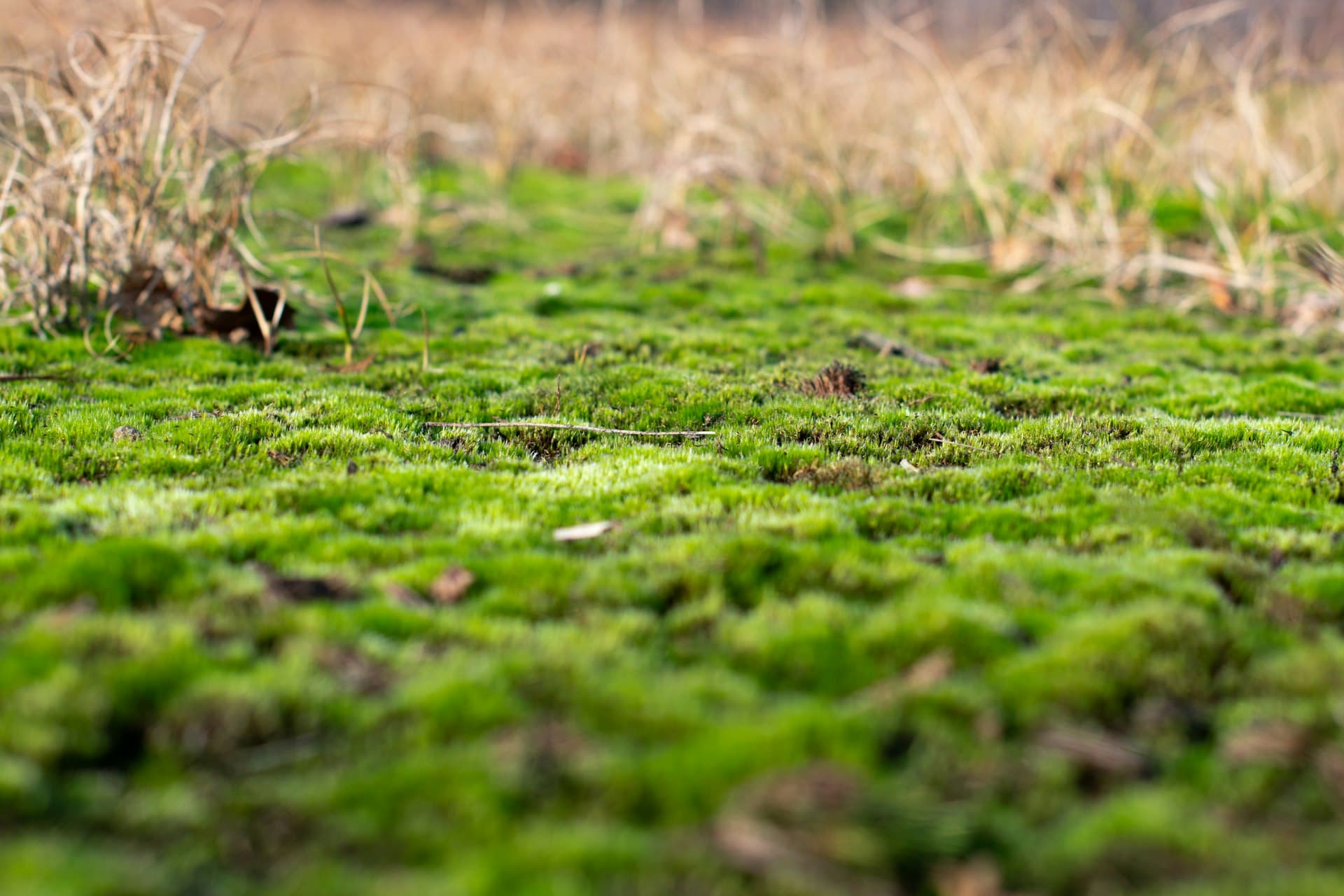
Clay particles are tiny and pack tightly together, which leaves very little space for air. When it rains, water has nowhere to go, so it sits in the root zone for weeks. Grass roots need air as much as they need water, and in saturated clay they slowly suffocate. The turf thins, and moss, which loves cold wet surfaces, fills every gap the grass gives up.
Then the weather flips. As clay dries it shrinks and sets like concrete. Roots that spent winter in the shallow wet layer never grew deep, so they are the first to run out of moisture. The surface cracks, the lawn browns off, and walking on it feels like walking on a patio.
Here is the thing worth grasping: those two extremes are one problem. The moss you raked out in February and the cracks you are staring at now come from the same soil behaving exactly as clay behaves. If your lawn has done both inside twelve months, and after this year's heatwaves most Essex lawns have, nothing unusual is wrong. Compaction makes both halves of the cycle worse: clay compacts from nothing more than foot traffic and the weekly mow, and every bit of it squeezes out what little air space there was.
In fairness to clay, it has one genuine advantage: it is fertile, and it holds nutrients and moisture far better than sand. A clay lawn with decent structure at the surface stays greener for longer in a dry spell than a lawn on light soil. The whole job is building that structure.
The autumn playbook: aerate, topdress, overseed
None of this is July work. The ground is far too hard for tines right now, and new seed would not survive the heat. The window is September to mid-October, once rain has softened the soil but before it turns saturated. What you can do now is plan it, because autumn slots fill quickly.
Hollow-tine aeration
This is the single most valuable thing you can do for a clay lawn. Hollow tines punch into the turf and pull out plugs of soil, leaving thousands of open holes. Air gets in, winter rain drains down instead of pooling, and roots follow the channels deeper. Solid spikes are not a substitute: pushing a solid tine into wet clay just squeezes the soil around the hole even tighter.
Leave the cores on the surface for a few days to dry, then collect them with the mower. On a small lawn you can do the whole job by hand with a hollow-tine aerator; it is slow, honest work, but the tool is cheap and it does exactly what the machine does. For anything bigger, a machine makes sense, and it is the core of our aeration service. On clay this is an every-autumn job, not a one-off.
Topdressing
Aeration opens the holes; topdressing decides what fills them. Brushing a sandy topdressing across the lawn straight after aerating drops free-draining material into every core hole, creating thousands of little drainage columns through the surface layer. Keep it thin, a few millimetres at most, so the grass is never smothered.
One year of this helps. Repeated every autumn, it genuinely changes the top few centimetres of soil, which is where most of the grass plant lives. You do not transform the subsoil. You build a better surface on top of it, a little at a time.
Not sure whether your lawn needs aerating, scarifying, or both this autumn? A free survey will tell you exactly what your lawn is sitting on and what to book. Book a free lawn survey
Overseeding with the right grasses
Thin turf on clay never stays thin for long, because moss takes the space. So the final step of the autumn window is thickening the sward. Overseed straight after aerating and topdressing, using a hard-wearing, deep-rooting mix with good drought tolerance: those are the grasses that can root down through the improved surface in autumn and then survive the following July. In warm, moist autumn soil the seed is up within 7-14 days.
If the lawn is carrying a lot of thatch or dead moss, scarify first, in the same September to mid-October window, then seed into the opened surface. That combination is exactly what our scarification and overseeding service does, and on clay it pairs naturally with aeration.
Habits that make clay easier all year round
The autumn work does the heavy lifting, but a few everyday habits decide whether it holds:
- Mow high. Keep the cut at 35mm or above. Taller grass grows deeper roots, shades the soil, and crowds out moss.
- Water deep and rarely in summer. One or two proper morning soaks a week beat a nightly sprinkle, and never water in the evening. Baked clay sheds water at first, so if you see run-off, pause for ten minutes and go again.
- Stay off it when it is saturated. Every trip across a soggy clay lawn in December compacts it a little more. Use the path, not the grass.
- Feed through the growing season. A thick, well-fed lawn is the best moss defence there is, and fertile clay rewards feeding.
Be realistic: you are managing clay, not fixing it
No product or single treatment turns clay into free-draining loam, and anything promising to do so in one application deserves your scepticism. What honest clay management delivers is steadier: after the first autumn of aeration and topdressing you will notice water puddling less and the lawn coming through winter thicker. By the second or third autumn the difference is obvious, with less moss, fewer bare patches, and a lawn that shrugs off wet weeks that used to drown it.
It is maintenance, not a cure. Miss a couple of autumns and the clay quietly reasserts itself, because the soil underneath has not changed and never will. That is the correct expectation, and lawns managed this way year after year are consistently the best-looking lawns I visit.
How we handle clay lawns at Greener
Nearly every lawn I treat in Colchester and the surrounding Essex towns and villages is on clay, so this is not a speciality service, it is the day job. Every free survey starts with the soil: I check structure, compaction, and drainage before talking about treatments, because on clay those findings decide everything else.
The Treatment Plan is built around that reality. A lawn renovation booked alongside it as a one-off, timed for spring or autumn, does the ground work: scarification and overseeding, with aeration and topdressing where the survey shows compaction. Every lawn benefits from one each year for the very best result, because thin turf on clay always goes backwards, and the feeding programme through the year keeps the sward dense enough to hold the ground the renovation wins.
I will always tell you where you sit on the journey. A lawn that has been waterlogged and mossy for years takes a first year of recovery before it takes off. By year two or three, the same clay that caused all the trouble starts working for you.
Clay is what Essex gives us. You cannot swap the soil, but you can absolutely change how the lawn lives on it.
Want help with your lawn?
Book a free lawn survey and we'll take a look at your lawn. No obligation, honest advice.